The Big Question: Who Really Invented Solar Power?
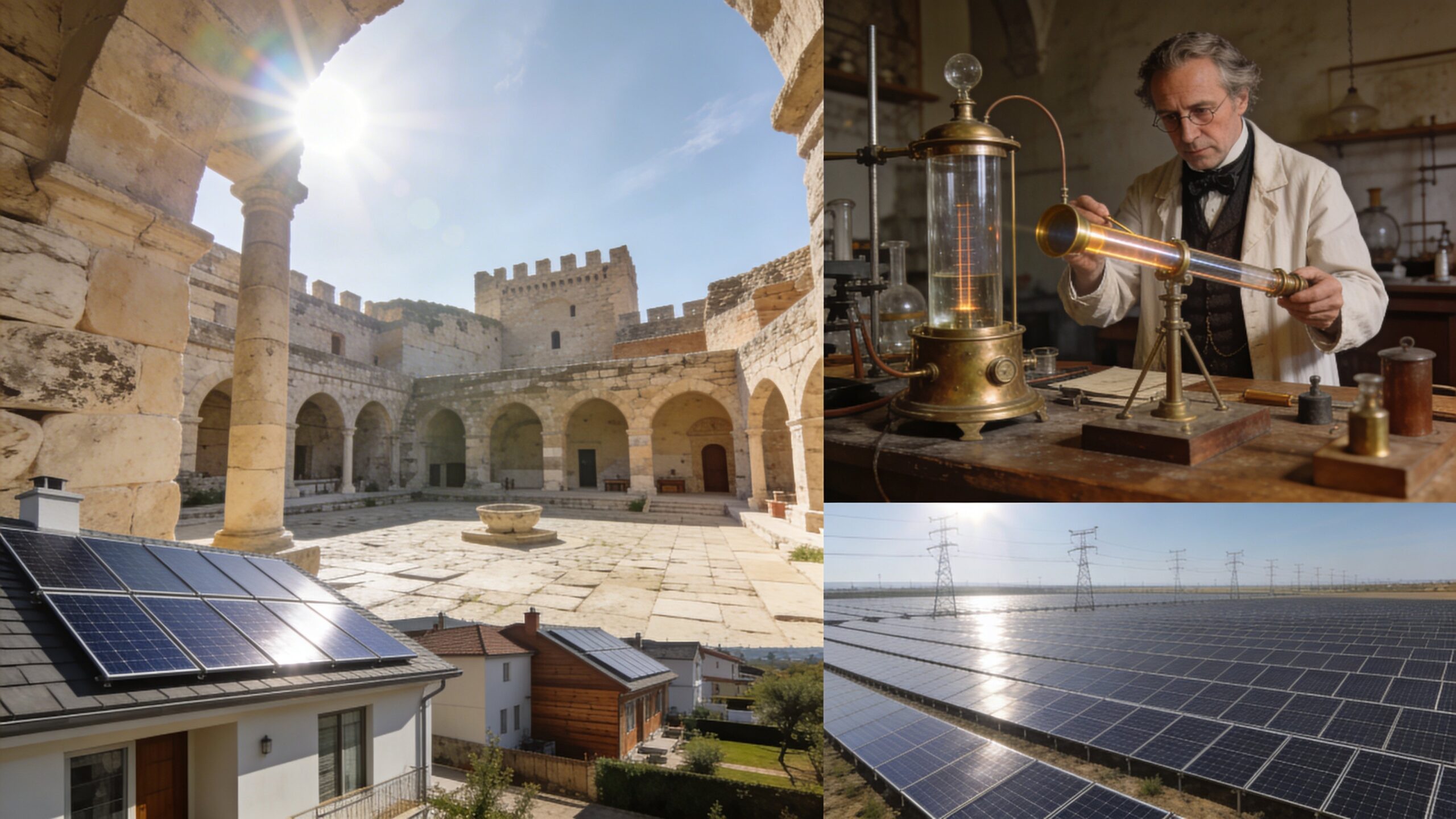
The story of solar power does not begin with a single inventor or a single moment in history. Instead, it unfolds across thousands of years, shaped by curiosity, experimentation, and technological breakthroughs. Asking “who invented solar power” is a bit like asking who invented fire. The sun has always been a source of energy, but humanity’s understanding and ability to harness it evolved gradually over time. Solar power, as we know it today, is the result of countless discoveries layered on top of one another. From ancient civilizations using sunlight for warmth and agriculture to modern engineers designing high-efficiency solar panels, the journey is both complex and fascinating. Each era contributed something essential, transforming sunlight from a passive resource into a powerful, controlled energy source.
A: No single inventor—many contributors over centuries.
A: The photovoltaic effect was discovered in 1839.
A: Modern panels can exceed 20% efficiency.
A: No, but batteries can store energy.
A: Yes, it relies on sunlight.
A: Typically 25–30 years.
A: Yes, with proper system sizing.
A: Minimal—mostly cleaning panels.
A: Sunlight, angle, shading.
A: It’s a key part of clean energy systems.
Ancient Beginnings: The First Use of Solar Energy
Long before electricity, humans understood the value of the sun. Ancient civilizations, including the Greeks, Romans, and Chinese, used solar energy in simple but effective ways. Buildings were designed to face the sun during colder months, maximizing warmth and reducing the need for additional fuel. This practice, often referred to as passive solar design, was one of the earliest forms of solar power usage.
In ancient Rome, architects used glass windows to trap heat inside homes and bathhouses, creating a greenhouse effect. Meanwhile, in China, mirrors and reflective surfaces were used to concentrate sunlight for heating and cooking. These early innovations demonstrated a basic understanding of solar energy’s potential, even if the science behind it was not yet fully understood.
These early uses were not inventions in the modern sense, but they laid the foundation for future discoveries. They showed that sunlight could be harnessed intentionally, rather than simply experienced.
The Scientific Breakthrough: Discovering the Photovoltaic Effect
The true turning point in solar power history came in 1839 when Alexandre Edmond Becquerel made a groundbreaking discovery. While experimenting with metal electrodes in a conductive solution, he observed that light could generate an electric current. This phenomenon became known as the photovoltaic effect.
Becquerel’s discovery marked the first time sunlight was directly converted into electricity. Although the technology at the time was far from practical, the concept was revolutionary. It proved that light itself could be transformed into usable energy without moving parts or combustion. This discovery laid the scientific foundation for everything that followed. Without the photovoltaic effect, modern solar panels would not exist.
Early Experiments: Turning Theory Into Reality
After Becquerel’s discovery, scientists began experimenting with materials that could better capture and convert sunlight into electricity. In the late 19th century, Charles Fritts created the first true solar cell using selenium coated with a thin layer of gold.
Fritts’ solar cell was inefficient by today’s standards, converting less than 1% of sunlight into electricity. However, it was a crucial step forward. For the first time, a device existed that could continuously generate electricity from sunlight.
Around the same time, Willoughby Smith discovered that selenium’s electrical properties changed when exposed to light. This finding reinforced the idea that certain materials could interact with sunlight in powerful ways, opening the door to further experimentation. These early pioneers were not building commercial products. They were exploring possibilities, pushing the boundaries of what was scientifically possible.
The Birth of Modern Solar Cells
The modern era of solar power began in 1954 at Bell Labs. A team of researchers, including Daryl Chapin, Calvin Fuller, and Gerald Pearson, developed the first practical silicon solar cell. Unlike earlier designs, this solar cell could convert about 6% of sunlight into electricity, making it far more efficient and reliable. It was the first time solar technology became viable for real-world applications. This invention is often considered the true beginning of modern solar power. It transformed the photovoltaic effect from a scientific curiosity into a practical energy solution.
Solar Power Goes to Space
One of the first major uses of solar technology was not on Earth, but in space. Satellites required a reliable, long-lasting energy source, and solar panels provided the perfect solution. In 1958, the Vanguard 1 satellite became one of the first to use solar cells for power.
In the vacuum of space, where sunlight is abundant and uninterrupted, solar panels proved incredibly effective. This success helped validate the technology and encouraged further investment and research. Space exploration played a significant role in advancing solar technology. Improvements made for satellites eventually made their way back to Earth, enhancing efficiency and durability.
The Energy Crisis and Solar Expansion
Solar power remained relatively niche until the 1970s, when global energy concerns began to shift. The oil crisis highlighted the risks of relying heavily on fossil fuels, prompting governments and researchers to explore alternative energy sources.
During this period, solar power gained significant attention. Investments increased, and new technologies were developed to improve efficiency and reduce costs. Solar panels began appearing in more practical applications, from remote power systems to early residential installations.
This era marked the transition of solar power from experimental technology to a viable alternative energy source. It also sparked a long-term movement toward renewable energy that continues today.
Technological Evolution: From Silicon to Advanced Materials
Modern solar technology has come a long way since the first silicon cells. Researchers have developed new materials and designs that significantly improve efficiency and reduce manufacturing costs. Thin-film solar cells, perovskite materials, and multi-junction cells represent just a few of the innovations shaping the industry.
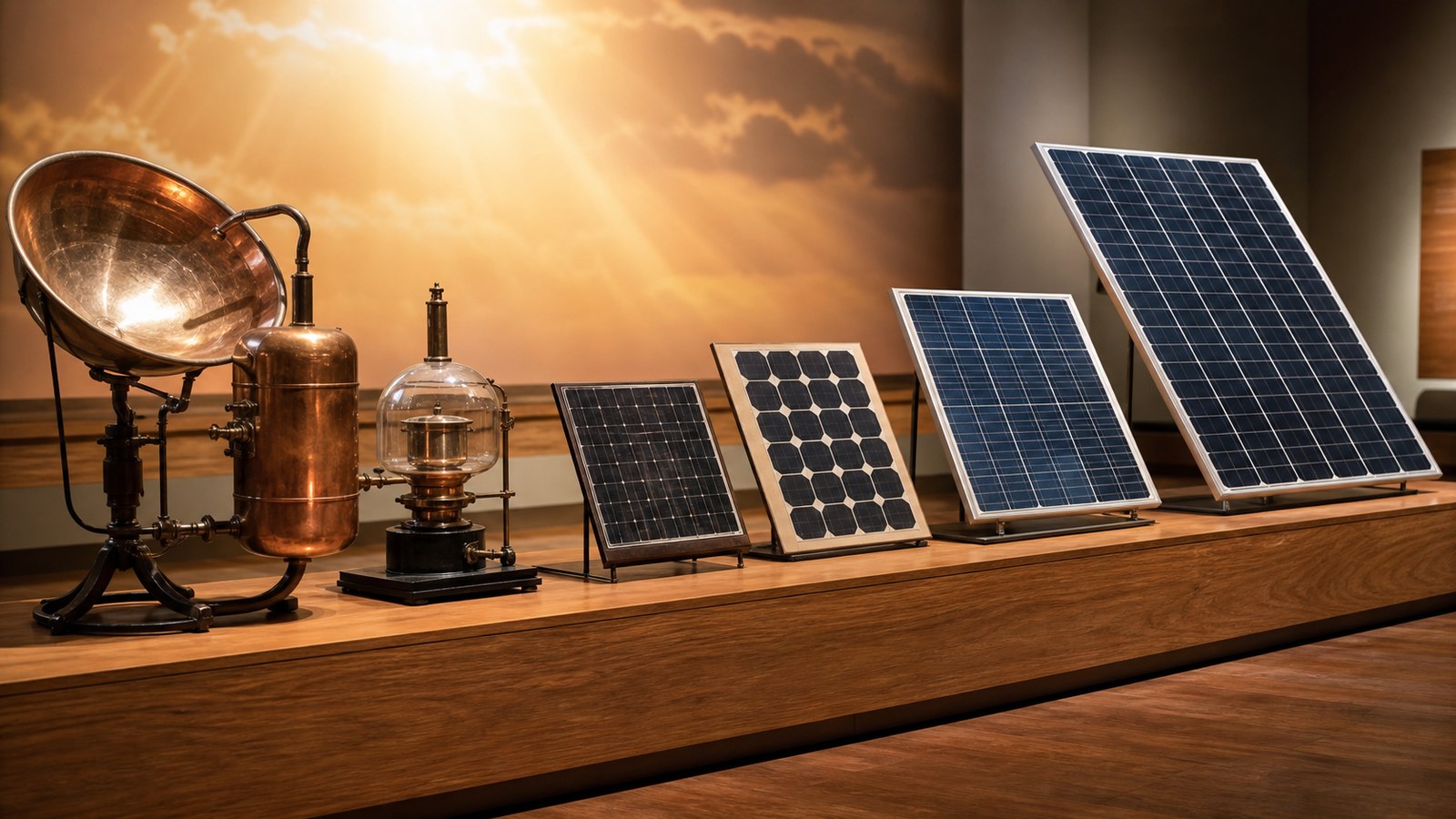
Each advancement builds on the work of earlier pioneers. The basic principle remains the same—capturing sunlight and converting it into electricity—but the methods have become more sophisticated and efficient. Today’s solar panels can achieve efficiencies exceeding 20%, a dramatic improvement over early designs. This progress has made solar power more accessible and practical for widespread use.
Solar Power in Everyday Life
What was once a scientific experiment is now a common feature in homes and businesses around the world. Rooftop solar panels, solar farms, and portable solar devices are increasingly part of everyday life. Solar power is used to generate electricity, heat water, and even power vehicles. It has become a key component of the global shift toward cleaner, more sustainable energy sources. The widespread adoption of solar technology reflects decades of innovation and investment. It also demonstrates how a simple idea—capturing sunlight—can evolve into a transformative technology.
The Future of Solar Power
The story of solar power is far from over. Researchers continue to explore new ways to improve efficiency, reduce costs, and expand applications. Emerging technologies, such as solar paint and transparent solar panels, hint at a future where solar energy is integrated seamlessly into everyday environments.
Energy storage solutions, including advanced batteries, are also playing a crucial role. By storing excess energy generated during sunny periods, these systems ensure a reliable power supply even when the sun is not shining. As technology advances, solar power is expected to play an even larger role in global energy systems. It represents not just a solution to current energy challenges, but a foundation for a more sustainable future.
So, Who Invented Solar Power?
The answer is not a single name, but a chain of innovators. From ancient builders who understood the value of sunlight to scientists like Alexandre Edmond Becquerel and engineers at Bell Labs, solar power is the result of centuries of progress.
Each contribution, no matter how small, played a role in shaping the technology we rely on today. Solar power was not invented overnight—it was discovered, refined, and perfected over generations. Understanding its origins provides a deeper appreciation for the technology itself. It highlights the power of human curiosity and the importance of innovation in solving complex challenges.