The Long Road to Solar Panels
The history of solar panels is not the story of a single invention. It is the story of centuries of human curiosity, scientific experimentation, and technological refinement. Solar panels may look like a modern solution built for the clean-energy age, but their roots reach deep into the past. Long before rooftops were covered in photovoltaic modules and large solar farms spread across deserts, people were already fascinated by the power of sunlight. What makes the story of solar panels so compelling is that it blends ancient awareness with modern science. Civilizations understood the warmth and usefulness of the sun thousands of years ago, but turning sunlight into electricity required a completely different level of understanding. It took breakthroughs in chemistry, physics, materials science, and engineering to make solar panels possible. The result is one of the most important technologies in modern energy history, a system that captures one of nature’s oldest resources and transforms it into usable power.
A: No. Nighttime power comes from the grid, a battery, or another energy source.
A: Yes, but production is usually lower than it is under strong direct sunlight.
A: Not always. Many systems are grid-tied without batteries, while backup designs need storage or another backup source.
A: Many panels are designed for decades of service, with gradual output loss over time.
A: Sometimes it can reduce energy charges greatly, but fixed fees, seasonal use, and utility rules still matter.
A: Standard grid-tied systems usually shut down unless approved backup equipment is installed.
A: It should be checked carefully because roof replacement after installation can require panel removal and reinstallation.
A: They can help when space is limited, but cost, warranty, layout, and total production matter too.
A: Owners usually watch monitoring, keep panels reasonably clear, and arrange service when output or equipment looks abnormal.
A: Review energy use, roof condition, shade, utility rules, goals, and realistic budget before comparing systems.
Early Human Fascination With Sunlight
Long before the first solar panel existed, the sun already shaped how people lived. Ancient civilizations built homes, temples, and cities with the movement of sunlight in mind. In colder seasons, sunlight was welcomed into living spaces for warmth. In hotter climates, structures were designed to manage and reduce direct exposure. This early relationship with solar energy was not electrical, but it was deeply practical.
The Greeks and Romans used architecture to trap heat from the sun, effectively creating primitive passive solar systems. South-facing designs, stone materials that retained warmth, and early glass usage all showed a growing understanding that sunlight could be managed rather than simply endured. In many parts of the world, agriculture, calendars, and even religious rituals centered around solar cycles. The sun was not only a source of light, but a driver of civilization itself. Although these early societies did not invent solar panels, they helped establish the idea that sunlight was a resource worth studying and harnessing. That idea would become far more powerful as science advanced.
The Scientific Foundation Begins
The modern history of solar panels starts in the nineteenth century, when scientists began to investigate how light interacts with matter. The most important early breakthrough came in 1839, when French physicist Alexandre Edmond Becquerel discovered the photovoltaic effect. While experimenting with conductive materials and light, he found that certain materials could generate a small electric current when exposed to sunlight.
This moment was a turning point. Becquerel had shown that light could do more than provide illumination or heat. It could directly create electricity. Even though his experiments did not immediately lead to practical devices, the principle he discovered became the scientific foundation for every solar panel that followed. At the time, the discovery was more intriguing than useful. The electrical output was tiny, and the materials available were limited. Still, the idea was revolutionary. Electricity from sunlight had moved from fantasy into the realm of science.
Selenium and the First True Solar Cells
After the photovoltaic effect was identified, researchers began searching for materials that could turn that principle into a working device. In the late nineteenth century, selenium became one of the most important substances in early solar research. Scientists discovered that selenium responded to light in unusual electrical ways, making it a promising material for experimentation.
In 1883, inventor Charles Fritts created what is often described as the first true solar cell. He coated selenium with an extremely thin layer of gold, forming a device that could generate electricity from light. By modern standards, it was extraordinarily inefficient. It converted less than one percent of incoming sunlight into electricity. Still, it was a remarkable achievement. For the first time, a purpose-built object existed that could convert sunlight directly into electrical energy. Fritts believed that solar electricity had great potential, even at that early stage. He imagined a future in which buildings might one day use sunlight as a source of power. His vision was well ahead of the technology of his time, but it showed how powerful the concept already seemed.
Why Early Solar Technology Struggled
Despite these early breakthroughs, solar technology did not immediately change the world. The biggest problem was efficiency. Early solar cells produced only tiny amounts of electricity, far too little for widespread practical use. They were expensive, fragile, and difficult to manufacture consistently. In an era when coal and, later, oil were becoming dominant energy sources, solar power simply could not compete.
Another challenge was the limited understanding of atomic and electronic behavior. Scientists knew that light could influence materials, but they did not yet have the advanced semiconductor knowledge needed to design better solar cells. Without that deeper understanding, progress remained slow. As a result, solar research continued, but mostly as a niche scientific field rather than a mainstream engineering effort. The dream of efficient solar panels remained alive, yet it would need a major leap in materials science before becoming practical.
The Semiconductor Revolution Changes Everything
That leap came in the twentieth century with the rise of semiconductor research. Semiconductors are materials that can conduct electricity under some conditions but not others, making them ideal for electronic control. As scientists learned more about the properties of silicon and similar materials, they opened the door to a completely new generation of solar technology.
Silicon turned out to be especially important. It was abundant, stable, and capable of being engineered to respond to light in much more useful ways than selenium. Researchers learned how to purify silicon and manipulate its electrical properties through doping, a process that introduces tiny amounts of other elements into the material. This allowed engineers to create the electric fields necessary for more efficient photovoltaic conversion. The development of semiconductor theory did not just improve solar technology. It also shaped the rise of modern electronics, including transistors and computers. Solar panels were part of a broader scientific revolution that transformed the twentieth century.
Bell Labs and the Birth of the Modern Solar Panel
The most famous milestone in solar panel history arrived in 1954 at Bell Laboratories in the United States. A team of researchers including Daryl Chapin, Calvin Fuller, and Gerald Pearson developed the first practical silicon solar cell. Unlike earlier devices, this new cell produced enough electricity to power small electrical equipment. It achieved around 6 percent efficiency, a dramatic improvement over previous designs.
This invention is widely regarded as the birth of the modern solar panel. For the first time, solar technology had moved beyond a scientific curiosity and into a form that could be commercially meaningful. The Bell Labs solar cell attracted tremendous attention because it suggested that sunlight could become a real source of power in the modern world.
Even then, cost remained a major barrier. These early silicon cells were expensive to produce, which meant they were not ready for mass household use. Still, the principle had been proven. The core design of modern photovoltaic technology had arrived.
Solar Panels Find Their First Major Purpose in Space
One of the earliest successful applications for solar panels came not on rooftops or in neighborhoods, but in space. Satellites needed a lightweight, reliable, and long-lasting source of electricity. Batteries alone were not enough for long missions, and solar panels offered a solution unlike anything else. In the late 1950s and early 1960s, solar cells began powering spacecraft and satellites. This was a perfect match. In orbit, sunlight is abundant, and solar panels can generate electricity without the need for fuel. Space programs quickly became an important driver of solar technology, helping justify investment in a field that was still too expensive for widespread terrestrial use. This space connection mattered enormously. It proved that solar panels were dependable in demanding conditions. It also encouraged further research into durability, efficiency, and performance. Many of the lessons learned in space would later help improve solar panels on Earth.
The Energy Crises That Changed Public Interest
For much of the mid-twentieth century, solar panels remained a specialized technology. That began to change in the 1970s, when oil crises exposed the vulnerability of fossil-fuel-dependent energy systems. Governments, scientists, and the public started paying much closer attention to alternative energy sources, including solar power. The idea of generating electricity directly from sunlight suddenly felt not just exciting, but strategically important. Research funding increased. Public awareness grew. Companies and governments began investing more heavily in renewable energy development. Solar panels were no longer just laboratory devices or satellite components. They were becoming symbols of energy independence and innovation.
This period helped shift solar power from a scientific niche into a broader social and economic conversation. It did not instantly make solar cheap or common, but it moved the technology closer to mainstream relevance.
Improvements in Efficiency and Manufacturing
As the decades progressed, solar panel technology continued to improve. Engineers developed better production methods, more consistent silicon wafers, improved electrical contacts, and protective coatings that helped panels last longer outdoors. Every improvement made solar panels more efficient, more durable, and more affordable. Manufacturing scale also played a major role. As production expanded, costs began to fall. This pattern repeated across the solar industry: better science led to better products, and better manufacturing led to broader adoption. Researchers also explored thin-film technologies and other materials that could complement or compete with silicon in certain applications. By the late twentieth century and into the early twenty-first century, solar panels had transformed from premium specialty products into a growing global industry. What once seemed impractical was becoming increasingly accessible.
Solar Panels Enter Everyday Life
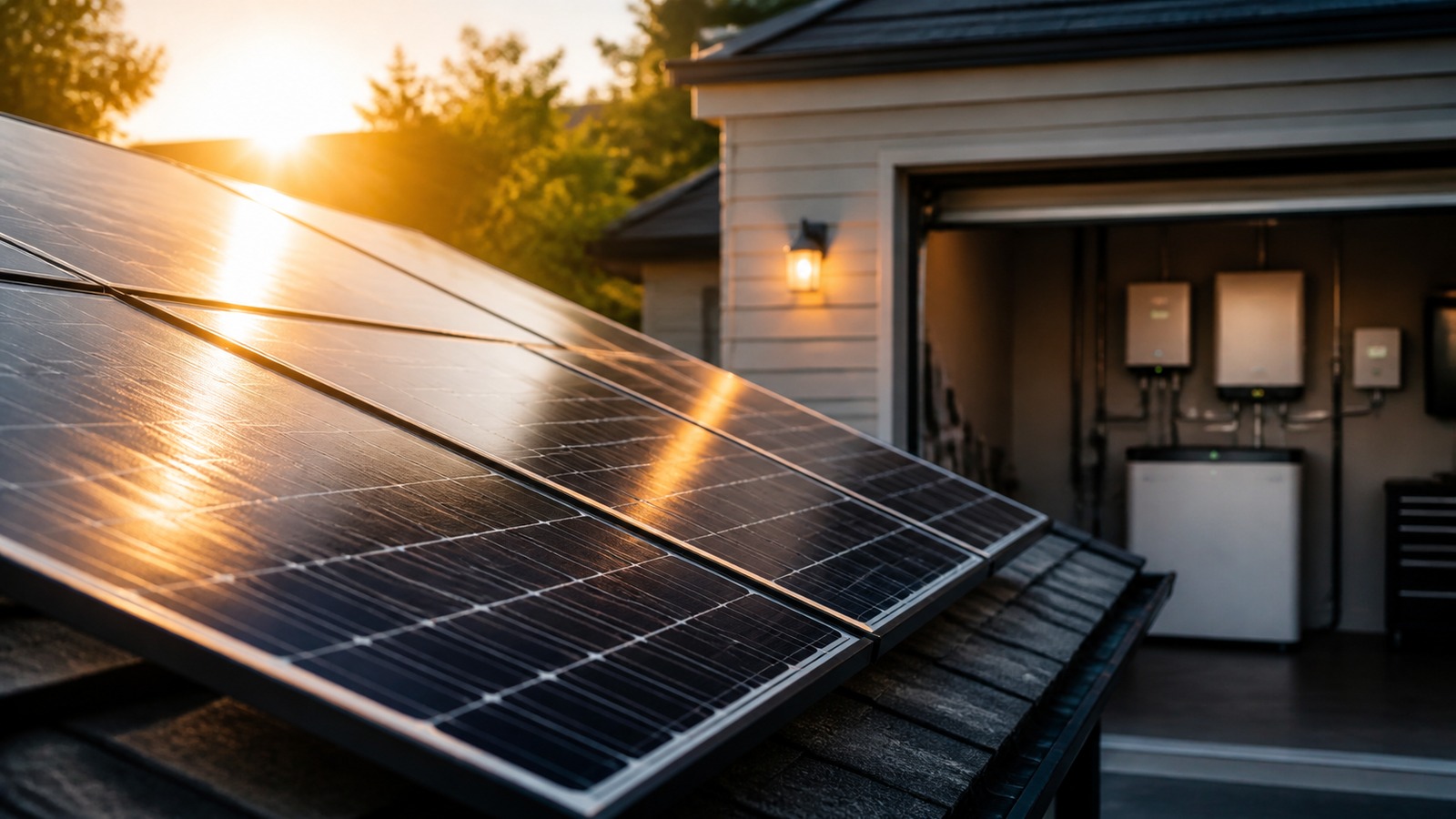
In the modern era, solar panels have become a visible part of daily life. They sit on homes, schools, warehouses, farms, parking structures, and utility-scale power plants. Portable solar products charge phones, support remote cabins, and power equipment far from electrical grids. The technology is no longer hidden away in laboratories or limited to satellites. It is part of the everyday energy landscape.
This widespread presence reflects decades of creation, refinement, and persistence. Solar panels were not created in a single flash of inspiration. They were built through a chain of discoveries that spanned generations. Every stage mattered, from the first observations of the photovoltaic effect to the industrial engineering that made mass production possible. What is especially striking is how solar panels combine elegance and complexity. At a glance, they seem simple: dark surfaces absorbing sunlight. But behind that simplicity lies a deep history of scientific progress and human ambition.
How Solar Panels Actually Work
To appreciate how solar panels were created, it helps to understand the basic principle behind them. A solar panel is made up of photovoltaic cells, usually based on silicon. When sunlight strikes these cells, photons transfer energy to electrons in the semiconductor material. That energy frees the electrons and causes them to move, creating an electric current.
This process depends on carefully engineered layers and electric fields within the material. It is not enough to simply shine light on metal or glass. The material must be designed to guide electrons in a useful direction. This is why the discovery of semiconductors and controlled doping was so important. It turned the photovoltaic effect into a reliable and scalable technology. Modern panels connect many cells together to produce useful amounts of electricity. That electricity is then converted and managed so it can power homes, buildings, and larger systems. The process may look straightforward today, but it took more than a century of research to perfect.
The Global Rise of Solar Technology
As solar panels became cheaper and more efficient, countries around the world began adopting them at a much faster pace. Some regions embraced rooftop solar for homes and businesses, while others developed large solar farms capable of sending electricity directly into national grids. In many places, solar power became one of the fastest-growing energy technologies of the century.
This growth was driven by several forces at once. Costs kept falling. Climate concerns increased. Energy diversification became more attractive. Advances in batteries and grid systems made solar even more practical. The result was a global expansion that would have seemed almost impossible to the early pioneers of the field. The journey from a fragile selenium device to a widespread infrastructure technology is one of the most dramatic success stories in modern engineering. It shows how a once-experimental concept can reshape industries and public expectations.
A Technology Created Across Generations
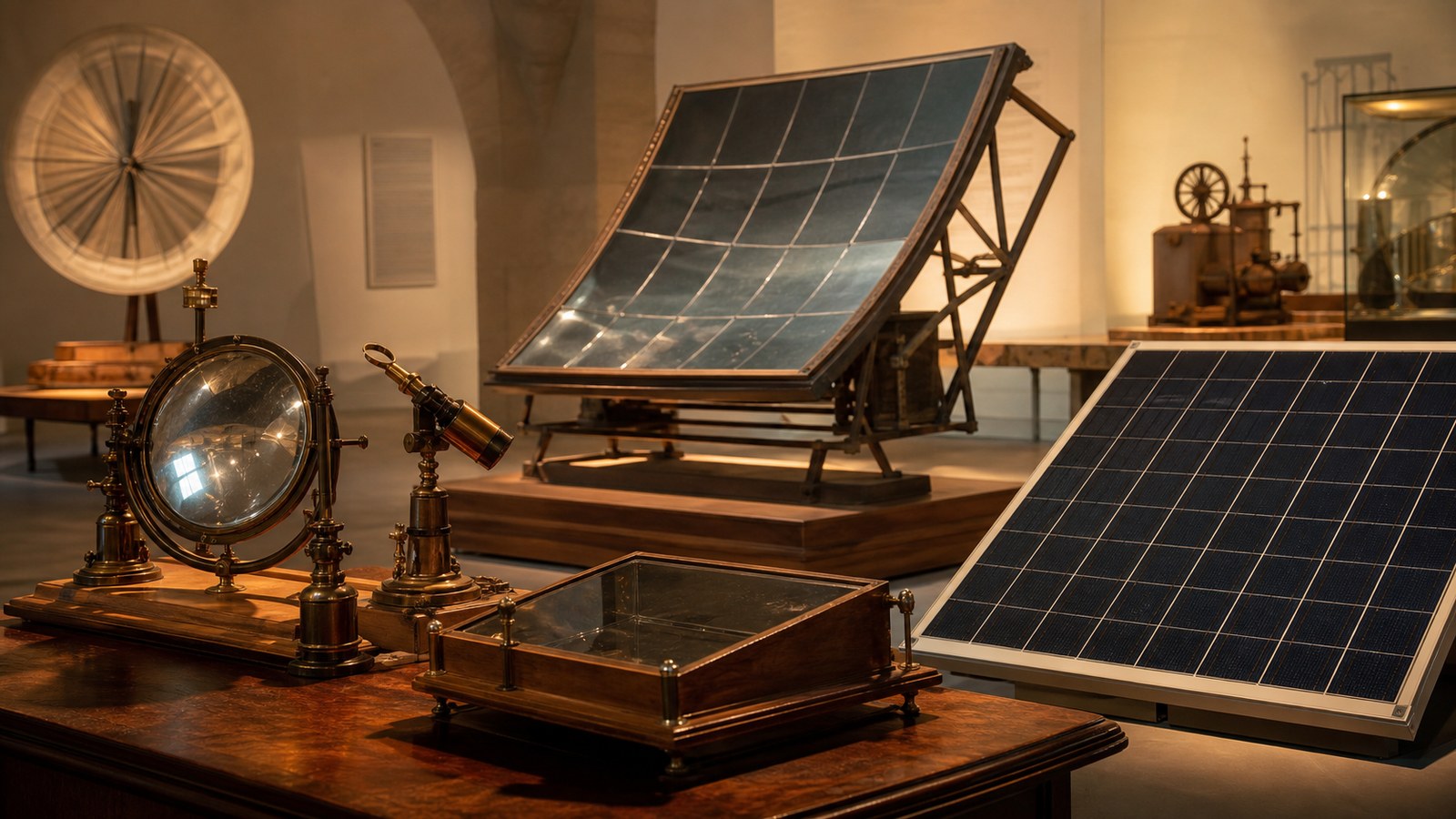
The history of solar panels is not the story of one inventor solving one problem. It is the story of many people, many discoveries, and many decades of progress. Ancient societies first recognized the practical value of sunlight. Nineteenth-century scientists uncovered the photovoltaic effect. Early inventors built primitive solar cells. Twentieth-century researchers transformed those ideas into practical silicon technology. Later engineers and manufacturers made solar panels durable, scalable, and useful for the modern world.
That long chain of innovation is what created the solar panel. It was built piece by piece, idea by idea, generation by generation. Today, solar panels stand as one of the clearest examples of how science, persistence, and engineering can turn a natural force into a transformative technology. As the world continues to search for cleaner and smarter energy systems, the history of solar panels becomes even more meaningful. It reminds us that major breakthroughs rarely appear fully formed. They are created through patience, experimentation, and the willingness to imagine a better future powered by something as timeless as sunlight.