
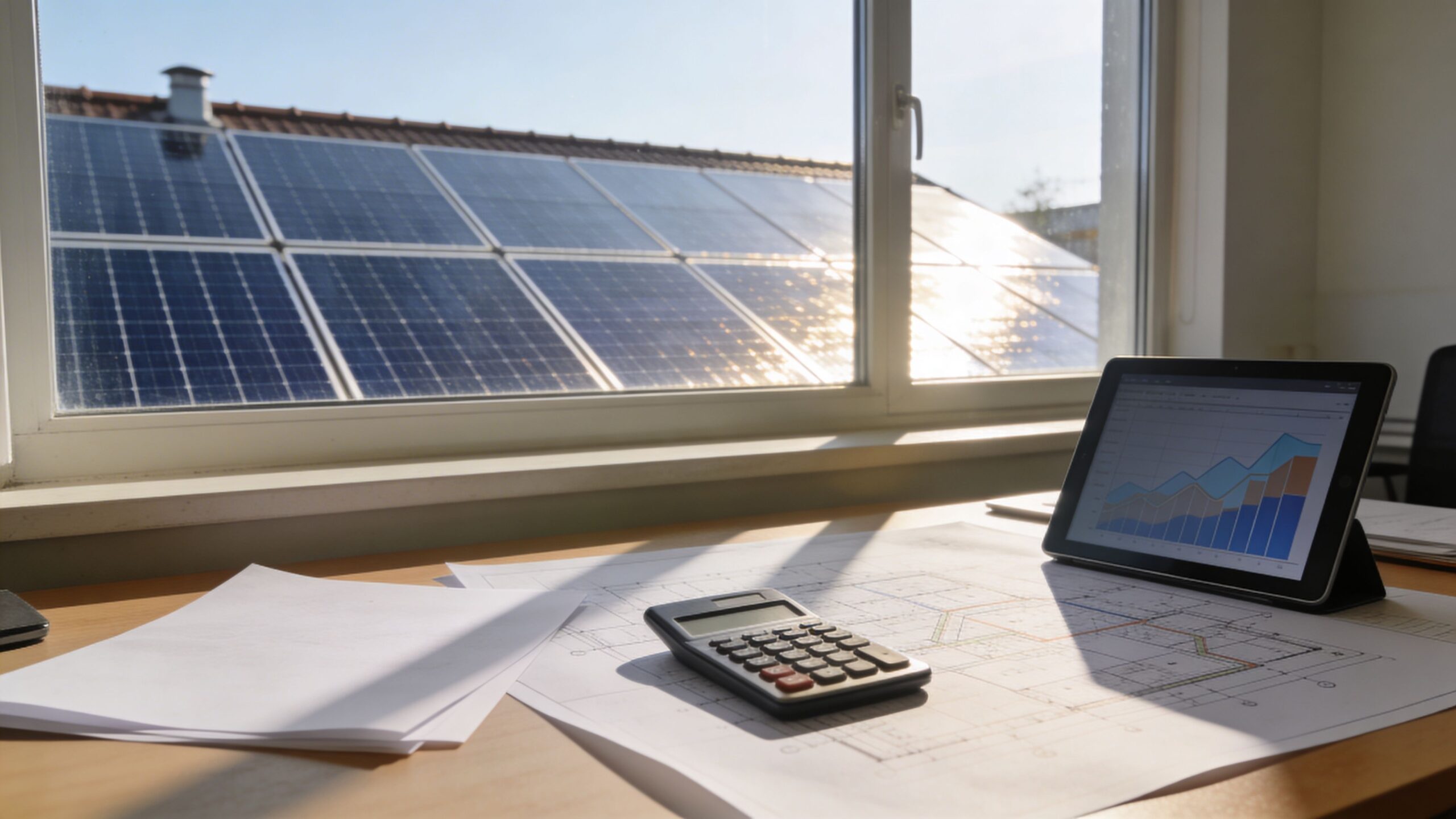
Solar doesn’t scale on sunshine alone—it scales on smart financing. Financing models are the hidden architecture that turns panels, permits, and projections into real projects on rooftops and open land. On Solar Power Streets, this category explores the many ways solar gets funded, owned, and paid back—so you can understand what’s behind the monthly bill savings, the power purchase agreement, or the utility-scale megaproject announced in the headlines. You’ll dive into leases vs. loans, PPAs vs. ownership, tax equity structures, project finance, green bonds, community solar subscriptions, and emerging models that bundle solar with storage and electrification. We’ll also unpack the practical tradeoffs: who takes performance risk, how incentives flow, why interest rates matter so much, and what terms like IRR, payback, and LCOE actually mean in plain language. Whether you’re a homeowner comparing options, a developer shaping a pro forma, or an investor tracking returns, these articles connect finance to outcomes—showing how capital choices can accelerate (or slow) the clean-energy transition.
A: With a loan you own the system; with a lease the provider owns it and you pay to use it.
A: A contract where you pay a set price per kWh the system produces, often with the provider owning it.
A: They change monthly payments and the cost of capital that developers use to build projects.
A: Escalators, fees, maintenance responsibilities, transfer terms, and early termination conditions.
A: Investors provide capital in exchange for tax benefits and a portion of project cash flows.
A: Often yes—bundles can improve cash flow if storage captures peak-value hours.
A: You subscribe to a shared project and receive bill credits based on your share.
A: Levelized cost of energy—the average cost per kWh over a system’s lifetime.
A: Compare total cost, contract flexibility, and who carries performance/maintenance risk.
A: Not always—savings depend on production, rates, policy, and your usage patterns.