
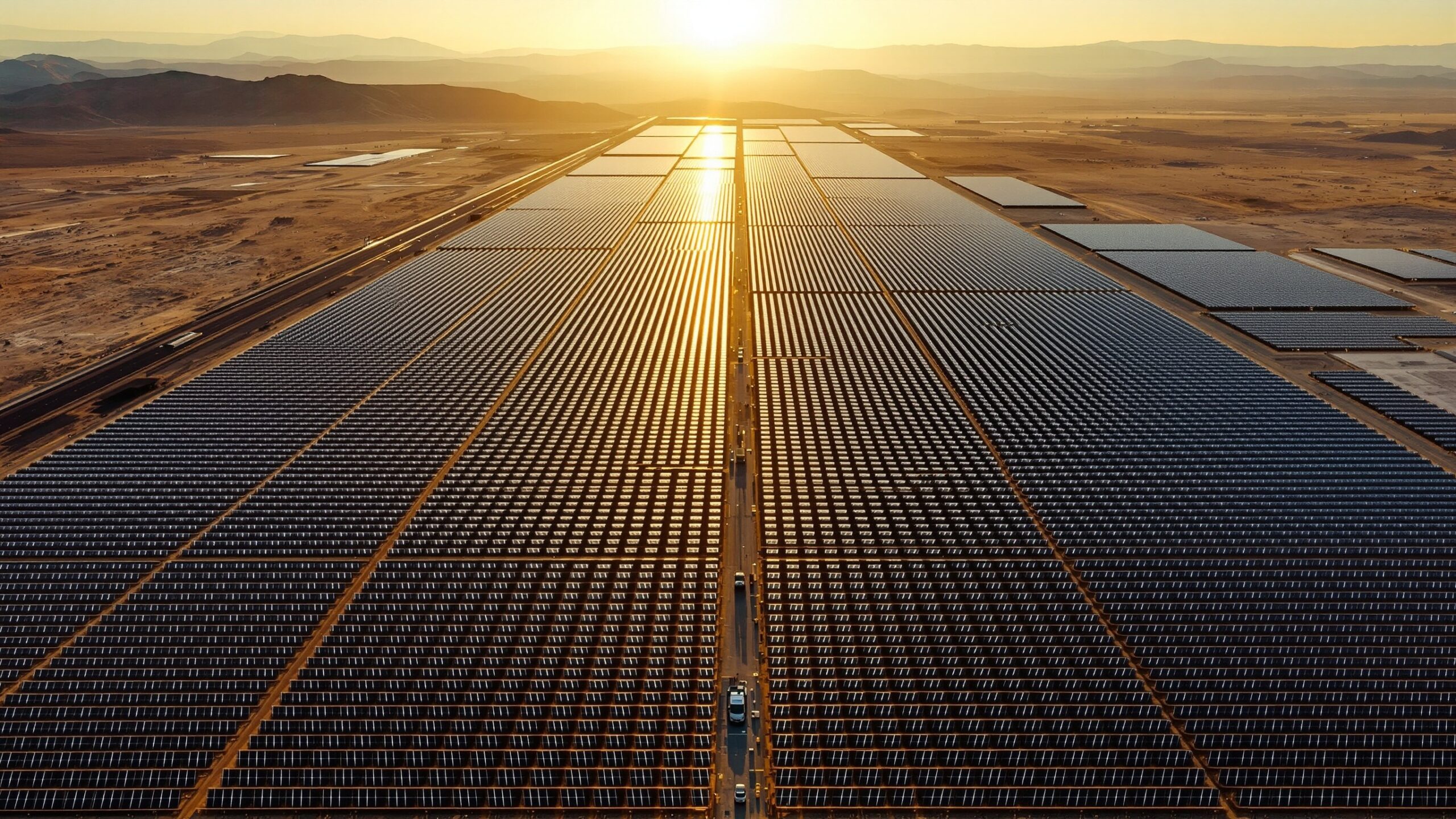
Solar Landmarks & Mega Projects is the big-league boulevard of Solar Power Streets—where renewable energy scales from rooftops to horizons. This category spotlights the massive installations that change skylines, power grids, and public imagination: desert-spanning solar farms, airport and stadium canopies, floating solar fields, transit depots, and campus-wide microgrids that run like cities within cities. Here you’ll find articles that unpack what “mega” really means—gigawatt ambitions, millions of modules, miles of cabling, high-voltage substations, and control rooms that track every watt in real time. We explore the engineering behind the spectacle: site selection, land and habitat planning, civil work, tracker geometry, dust and heat strategies, storm survivability, and the logistics of building at industrial speed. You’ll also see how these projects connect to people—jobs, community agreements, grid resilience, and the new visual language of clean infrastructure. Expect landmark case studies, behind-the-scenes build stories, and clear explanations of the tech that makes huge solar reliable. If you love scale, ambition, and the future you can actually see from space, you’re in the right place.
A: Typically utility-scale sites with massive footprints, high MW capacity, and grid-level infrastructure.
A: Trackers can boost annual energy, especially in sunny regions, improving overall economics.
A: Increasingly yes—storage helps shift energy to evenings and supports grid reliability.
A: Construction can be fast, but permitting and interconnection studies often dominate timelines.
A: Soiling, heat, equipment downtime, and grid curtailment—each can cut delivered energy.
A: Impacts vary—good planning includes habitat studies, corridors, and careful site design.
A: When grid operators reduce output due to congestion or oversupply—storage can help reduce it.
A: SCADA systems track inverter performance, weather, faults, and energy export in real time.
A: Sites are repowered, refurbished, or decommissioned with recycling and land restoration plans.
A: Yes—lessons on reliability, monitoring, soiling, and storage often trickle down to residential tech.