Decide Whether Mono Versus Poly Is Your Real Choice
The familiar comparison between black monocrystalline panels and blue polycrystalline panels can make shopping seem like a simple trade between performance and price. In practice, a new residential offer, a pallet of older discounted modules, and a working array already on your roof are three different decisions. The most useful answer depends on which decision you face. Modern mono products often offer strong power density and a wider selection of current cell designs, while older poly equipment may still provide useful electricity when its condition and application are suitable. Neither the color nor the crystal label tells you the installed cost, remaining service life, or compatibility with other equipment. Before choosing a side, establish the exact model, its provenance, and what the proposed system needs to accomplish.
A: No. Base the decision on condition, output, repair costs, and measurable replacement benefits.
A: Extra modules, labor, testing, and support limits can consume the purchase saving.
A: Wattage alone is insufficient; electrical characteristics, dimensions, and mounting must be checked.
A: Greater power density can allow more rated capacity within the usable footprint.
A: No. That appearance can reflect polycrystalline structure rather than damage.
A: Seek model identification, provenance, condition evidence, and clear applicable warranty terms.
A: Durability depends on the finished module, manufacturing, environment, and handling.
A: Compare equal-capacity designs under consistent conditions before examining layout-driven capacity gains.
A: Sometimes a separately designed configuration avoids unsuitable mixing of unlike modules.
A: A qualified professional should review condition, compatibility, and installation requirements.
What Actually Separates the Silicon Structures
Monocrystalline cells come from silicon with a continuous crystal structure, while polycrystalline cells contain multiple crystal regions. Those differences affect how the material is manufactured and how it can perform, but a finished panel adds many other variables: cell architecture, contacts, interconnections, glass, encapsulation, and electrical packaging. Crystal structure therefore provides a starting description rather than a complete performance prediction. For a buyer, the practical evidence lives in the model’s module-level specifications and the design it enables on the property. The Department of Energy’s crystalline-silicon research overview offers background on the technology family without turning it into a universal buying rule.
Why Space Often Gives Modern Mono an Advantage
On a roof with limited usable area, output per square foot can matter more than the panel’s individual price. Modern high-efficiency mono modules can often fit more rated capacity into a constrained footprint than older poly models. That advantage becomes valuable when setbacks, roof edges, vents, or shade leave little space. It should be demonstrated with an actual layout rather than inferred from a technology label alone.
Suppose a roof can accommodate a particular number of compact modules, but a larger alternative leaves awkward unused gaps. A larger wattage on each panel may not translate into greater total system capacity if fewer panels fit. Ask the installer to draw both layouts using the exact external dimensions and required clearances. The calculation should show installed watts on each usable roof plane, not simply multiply a theoretical count by the most attractive module rating.
Where space is abundant, the value of higher power density can shrink. A ground mount or a broad uncomplicated roof might reach the desired system size with either option. In that case, compare the complete installed cost and expected energy rather than paying a premium for density that the project does not need. The same mono product can be highly valuable on one property and offer little additional benefit on another.
Compare Equal Capacity Before Comparing Output
An array with more installed watts will often generate more annual energy than a smaller array under comparable conditions. That does not prove that every extra kilowatt-hour came from a superior crystal structure. To understand the technology difference, compare equal capacities with the same orientation, shade, and production assumptions. Then separately evaluate whether the higher-density option allows a larger system within the available roof area.
Temperature response, low-light behavior, and other model-specific properties can still influence yield. However, their effect should be evaluated using reliable specifications and a consistent model rather than a sweeping claim that one panel color always performs better in clouds or heat. Request the assumed annual energy for each exact configuration and an explanation of the factors driving the difference. This keeps a legitimate performance advantage separate from an exaggerated sales claim.
A Discounted Poly Panel Can Carry Hidden Costs
Low module prices can be appealing, especially for a small project or a buyer considering older inventory. The discount needs context. Some stock may be unused but long stored, while other modules may have been removed from a previous installation. Documentation, storage conditions, handling history, and warranty eligibility can differ. Establish which situation applies before treating the price as directly comparable with a current, supported product supplied through an installer.
Module dimensions and electrical characteristics can also change the installation economics. Extra modules may require more racking, connectors, labor, or ground area to reach the same capacity. An inverter that suits a modern module layout may need a different string design for older equipment. Even inexpensive panels must fit voltage, current, temperature, and protection requirements. The useful comparison is a complete engineered arrangement with all required work included.
There is also a practical support question: who will diagnose a failed module and obtain a compatible replacement? A seller’s attractive price does not establish long-term service coverage. Ask whether the installer accepts responsibility for the equipment, whether the manufacturer recognizes the warranty, and which costs remain with the owner. A discount can be worthwhile, but it should compensate for real differences rather than hide them.
Used Equipment Needs More Than a Visual Check
A panel that looks intact may still have electrical faults or damage that is difficult to identify casually. Glass, frames, backsheets, junction boxes, cables, and connectors all deserve attention, and appropriate electrical testing may be needed to evaluate suitability. Do not plug unknown modules into an existing system simply because the connectors appear to fit. A qualified professional should assess condition, compatibility, documentation, and the installation requirements. For permanent household use, unclear provenance and missing specifications can outweigh the appeal of cheap watts, especially when the owner expects dependable service over many years.
Keeping a Working Poly Array Is a Separate Decision
An existing polycrystalline system should be evaluated on what it produces and what problems it has. If it remains safe, serviceable, and reasonably productive, replacing it solely because mono panels are available may offer poor value. The replacement project would incur labor and potentially racking, electrical, permit, or inverter changes. Those costs need to be compared with the additional useful energy and other tangible benefits of the new system.
Begin with monitoring and service records. A sudden production decline may point to an inverter fault, new shading, a damaged circuit, or another issue that a targeted repair could address. Gradual differences from the original estimate need a broader review of weather, equipment aging, and usage of the monitoring system. Establish the cause before assuming the semiconductor family is responsible. A well-informed repair decision can preserve useful equipment and avoid unnecessary replacement work.
Expansion Introduces Compatibility Constraints
Adding modern mono modules to an older poly installation is not merely a matter of filling an empty roof space. Series-connected modules interact electrically, so mismatched current characteristics can limit performance. Inverter voltage windows, maximum current, cold-weather open-circuit voltage, and existing protective equipment all need review. Similar-looking plugs or roughly matching wattage ratings do not establish a safe and effective combination.
Sometimes the better expansion route is a separately designed array with suitable electronics rather than mixing new modules into an existing string. That decision depends on the original equipment, roof layout, utility requirements, and the owner’s goals. Ask the installer to explain what can remain, what must change, and why. A clear scope avoids paying for a claimed simple add-on that later requires substantial redesign.
Physical compatibility matters too. Modern replacement modules can differ in length, width, frame thickness, and permitted clamp zones. Matching electrical capacity does not guarantee that an existing rack can accept them. Keep the original model documentation and as-built information available during expansion planning. These details can determine whether repairing an older installation is straightforward or whether a more comprehensive upgrade becomes necessary.
Durability Depends on the Finished Product
It is tempting to equate a crystal category with a fixed service life, but outdoor durability depends on the entire module and its environment. Packaging, manufacturing quality, moisture protection, mechanical stresses, and installation practices all matter. A well-made poly module can continue operating while a poorly handled mono module develops problems, and the reverse can also occur. Compare the exact product’s warranty and documented condition rather than assigning every panel in a family the same lifespan.
Read warranty coverage carefully when comparing current products with older inventory. An output warranty describes a defined promise under stated conditions, while product coverage addresses specified defects. Labor, transport, testing, removal, and reinstallation may have separate treatment. For used equipment, warranty transfer and the original purchase date can matter. Obtain the applicable terms for the actual purchase instead of relying on a brochure that may describe a different sales channel or region.
Color Is a Preference, Not a Performance Test
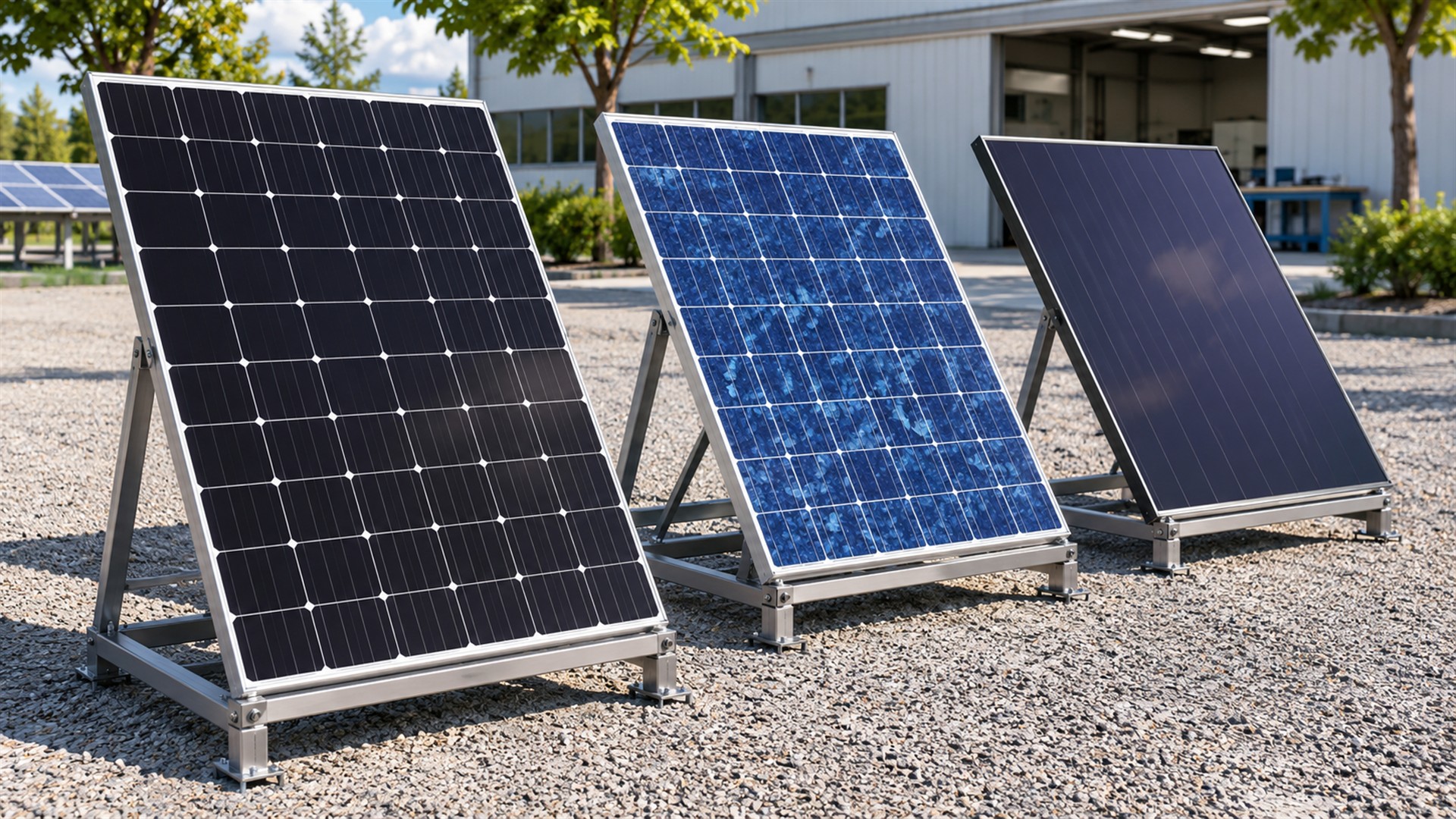
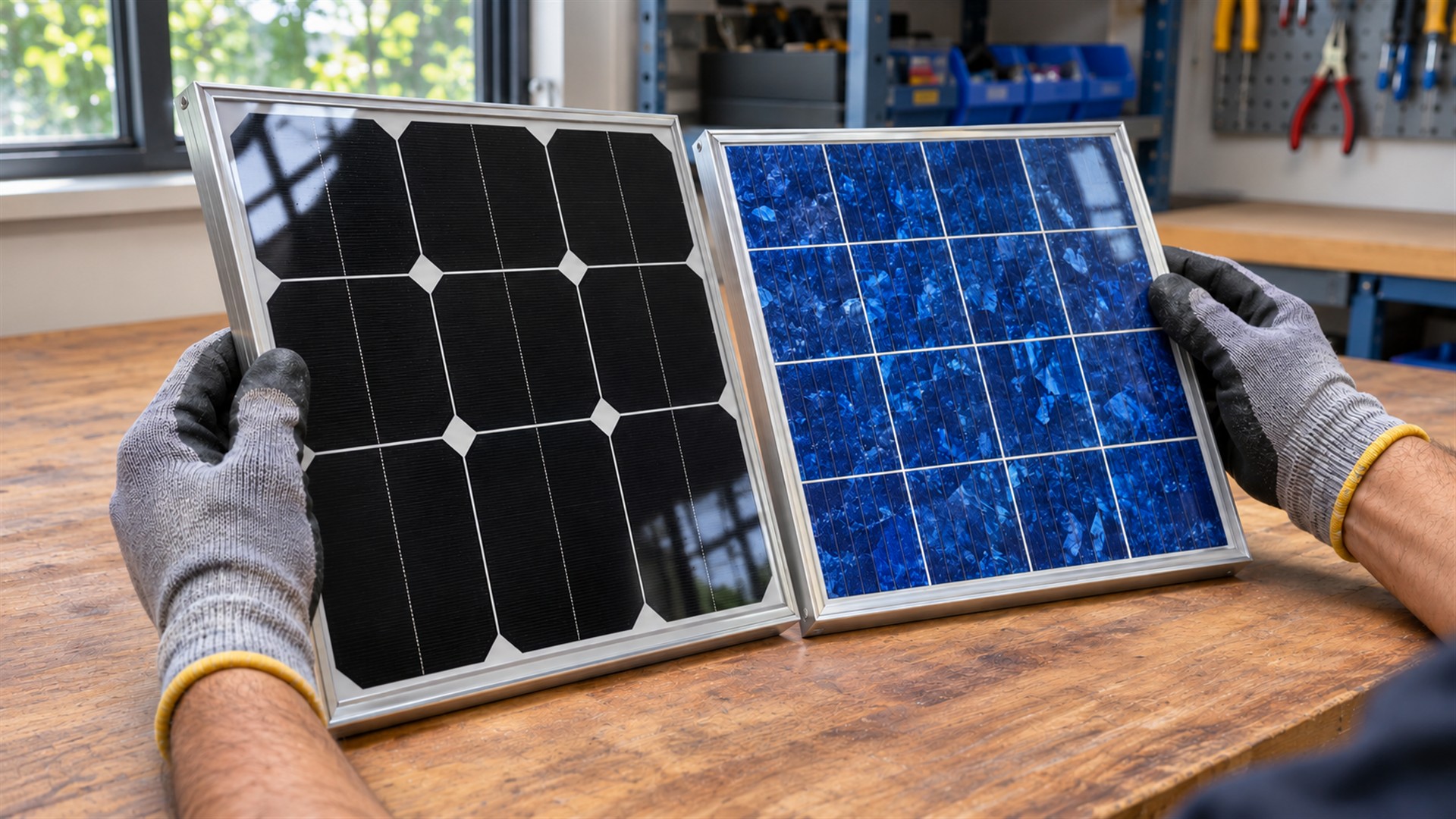
Black mono and mottled blue poly panels often look different, which can matter on a visible roof. However, cell color is not a substitute for an equipment specification or a production estimate. Frames, backsheets, reflections, and cell pattern all affect appearance, and photographs may exaggerate differences under particular lighting. If appearance carries a premium, ask for representative installed examples and price it as a design preference. This makes room for aesthetics without confusing it with guaranteed energy savings or long-term reliability.
A Practical Decision for Each Buying Situation
For a new professionally installed household system, start with current supported products available through qualified installers, then compare layouts, total price, and service arrangements. Modern mono equipment will often appear in those offers, but the objective is a strong finished project rather than winning a material-label contest. Request a clear explanation if an alternative is proposed, including how its cost and dimensions improve the system for your property.
For discounted or used poly stock, require a convincing reason to accept the additional uncertainty. A documented, appropriately tested module for a suitable application is different from an anonymous bargain. Add the necessary mounting, wiring, controls, labor, and testing before deciding that the saving is real. If no installer will support the equipment or essential documentation is missing, the low purchase price is not a sound basis for a permanent installation.
For a functioning older array, focus first on safety, actual energy production, and repairability. Replace it when a measured improvement or a genuine equipment problem justifies the work. Across all three situations, the sensible choice follows the roof, the complete electrical design, the cost of ownership, and the available support. Mono versus poly remains useful vocabulary, but the evidence attached to the exact equipment should determine the decision.
Keep Generation and Household Consumption Separate
Before blaming older panels for disappointing bills, compare generation records with changes in the home. New air conditioning, an electric vehicle, or increased occupancy can raise consumption even while the array operates normally. Utility billing changes can also affect what the owner sees without proving a problem in the modules. A sound comparison starts with measured electrical production and then examines how that electricity is used. This avoids replacing serviceable equipment to solve a consumption issue that the new modules would not automatically remove.
When replacement is being considered, request a baseline that describes the existing array under current conditions. Compare the proposed upgrade with that baseline rather than with an idealized original forecast or a particularly poor weather year. If records are incomplete, identify the uncertainty instead of treating an optimistic estimate as a measurement. The improvement can then be discussed honestly: additional capacity, a repair that restores output, a better roof layout, or a serviceability benefit. Each is a legitimate reason for work, but they should not be confused.