A Gray Sky Can Still Supply Useful Daylight
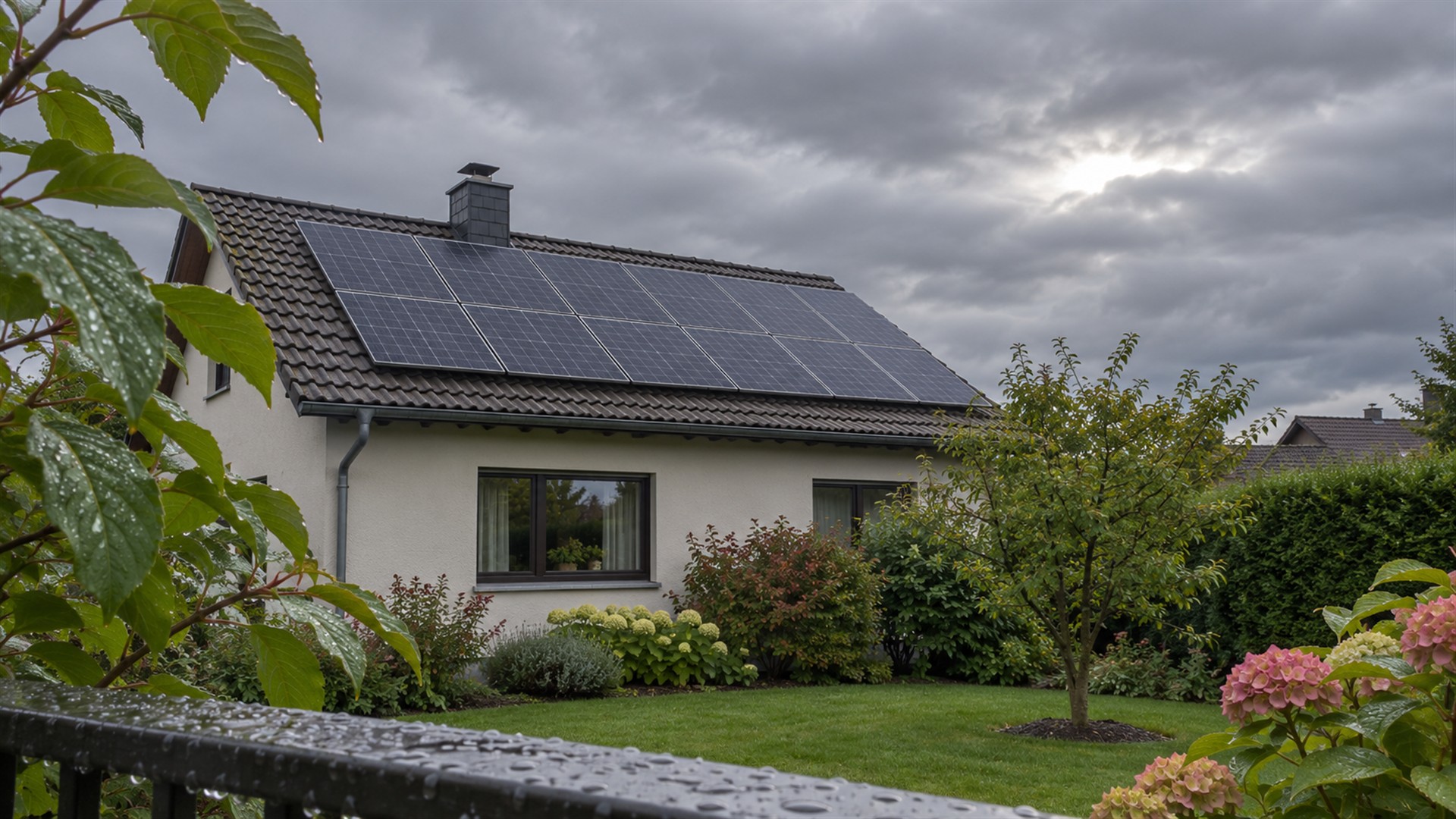
On an overcast morning, a solar array may continue generating even though the sun has no visible outline and the garden casts almost no shadows. Clouds scatter and absorb sunlight, but they do not usually remove all the light reaching the panels. Photovoltaic cells can use some of that diffuse illumination, so cloudy-day production is normally reduced rather than automatically zero. The reduction has no single reliable percentage: a thin bright cloud layer, a dark storm, and intermittent moving clouds create different conditions. Understanding those differences helps owners interpret their monitoring and judge whether a project suits the local climate. The practical goal is to plan around the location’s actual solar resource, including cloudy periods, instead of assuming either perfect sunshine or complete failure whenever clouds appear.
A: Scattered daylight can still deliver usable energy to photovoltaic cells.
A: No. Cloud properties, season, timing, and the comparison basis vary.
A: Moving clouds can produce those changes during normal operation.
A: A short peak does not describe the accumulated daily or annual energy.
A: Recharging depends on available energy and the installed charging strategy.
A: No. Backup requires an appropriate electrical design and controls.
A: Review location-based monthly production alongside seasonal demand.
A: Cooling can help conversion, but it cannot be assumed to cancel lower irradiance.
A: Only suitable flexible loads should move, with practical limits and occupant control.
A: Persistent unexplained changes, fault alerts, or damage deserve appropriate professional review.
Diffuse Light Arrives From Many Directions
Direct sunlight travels along a comparatively defined path from the sun, while diffuse light has been scattered through the atmosphere. Clouds change the mixture and the total amount reaching a surface. A photovoltaic module responds to usable incoming light rather than requiring a sharp visible beam. This distinguishes ordinary PV from concentrating equipment that relies more strongly on direct sunlight that can be focused onto a receiver.
The everyday clue is brightness rather than the presence of a sun-shaped opening in the clouds. A light overcast can leave the surroundings quite bright, while thick storm clouds can make midday feel dim. Neither observation replaces a measurement, but both help explain why two days labeled cloudy in a weather app can produce very different solar totals. The broad forecast category leaves out important information about irradiance at the array.
Panel direction still matters under cloudy conditions, although light arrives from a wider range of directions than under a clear sky. Roof geometry and obstacles continue to influence what the surface receives. A cloudy climate does not make every orientation equivalent or remove the value of site assessment. The useful comparison remains the energy expected from the actual installed planes through the weather patterns experienced at that location.
There Is No Universal Cloudy-Day Percentage
Claims that panels always produce a fixed share of their normal output under clouds oversimplify changing conditions. Cloud thickness, coverage, movement, solar angle, season, and the reference used for comparison all matter. A percentage relative to a clear noon reading is different from a percentage relative to a whole clear day’s energy. Before repeating a cloudy-day figure, establish the period, location, weather conditions, and measurement boundary it describes. Without those details, a neat number can give a false impression of precision.
Intermittent Clouds Create a Variable Power Curve
Broken cloud cover can make instantaneous output rise and fall quickly as the sun moves in and out of shadow. Monitoring often shows these changes as peaks and dips. A jagged curve can therefore be ordinary weather behavior rather than an equipment fault. The daily energy total integrates those intervals, which is why a day with dramatic fluctuations may still deliver a useful amount of electricity overall.
Occasionally, conditions near cloud edges can briefly increase incoming irradiance compared with a simple clear-sky expectation. That short-lived effect should not become a promise that cloudy weather is better for annual production. A brief high power value says little about the hours of reduced light surrounding it. Evaluate the accumulated energy and the broader climate rather than using a momentary spike to judge the value of the weather pattern.
Thick Cloud and Storm Conditions Can Reduce Output Sharply
A dense cloud layer can greatly reduce light at the surface, and production can become very low. The exact response depends on the equipment and conditions. If available power falls below what an inverter needs for operation, the system may stop exporting useful AC electricity until conditions improve. That behavior is different from assuming that the photovoltaic cells require direct sun before they can respond at all.
Storms can also bring conditions beyond ordinary cloud shading, including debris, damage, or a grid outage. A conventional grid-connected system generally cannot continue supplying a home through a utility failure without suitable backup design and controls. Cloudy operation and outage operation are separate capabilities. Ask about each one explicitly when reviewing a proposal so that normal daylight generation is not mistaken for a promise of uninterrupted household power.
After severe weather, use appropriate monitoring and professional support if there are fault alerts or signs of damage. Do not climb onto a wet roof to inspect modules or clear debris. The useful owner task is to identify the observed change, keep relevant alerts and timing, and contact a qualified service provider when needed. Electrical and physical assessment should follow the actual installation and equipment requirements.
Rain, Temperature, and Clouds Affect Different Things
Clouds change incoming sunlight, while temperature changes how a module converts the light it receives. Cooler cells can perform better than hotter cells under otherwise comparable illumination, but cooling does not guarantee enough extra efficiency to cancel a large reduction in sunlight. Rain may also change surface conditions and remove some loose dirt, although its cleaning effect varies. These influences can occur together without being interchangeable explanations for the day’s production.
A rainy but bright interval can therefore produce differently from a dry dark overcast interval. Likewise, a cool cloudy day should not be compared casually with a hot clear day to derive a universal equipment advantage. Identify which conditions actually changed before attributing the result. This keeps an owner’s interpretation grounded in the energy reaching the array and the way the system operated during the period.
Cloudy Regions Need Climate-Based Forecasts
A solar project should use local weather and solar resource data, not a production figure imported from a sunnier region. Tools such as PVWatts estimate grid-connected production from location and system inputs using hourly simulation. A realistic preliminary estimate incorporates representative weather, then the proposed roof orientation, shade, capacity, and equipment. Cloudiness is part of the resource assessment rather than an afterthought applied only when an owner notices a low-output day.
Monthly results are particularly helpful where winter combines shorter days, lower solar angles, and frequent cloud cover. Those influences can reinforce one another, creating a weak season even when summer production is strong. An annual average alone can hide that pattern. Review the low-production months alongside the household’s seasonal electricity demand to understand how much grid supply or another energy source is likely to remain necessary.
A modeled typical year also differs from a forecast of the exact coming year. Individual months and years can be cloudier or clearer than the reference data. Retain a realistic range and avoid treating a precise annual estimate as certainty. The purpose of the model is to compare designs and establish a useful expectation, while actual weather will still influence the electricity ultimately produced.
More Efficient Panels Do Not Remove Cloud Cover
Higher module efficiency can place more rated capacity within a fixed area, which may be useful on a constrained roof. It does not make the array independent of irradiance. Claims of exceptional low-light performance should be tied to the exact product, a relevant measurement, and an annual estimate for the site. A small model-specific advantage under certain conditions is different from a panel that continues producing its clear-sky output beneath dark clouds.
Batteries Shift Energy but Need Recharging
A charged battery can supply electricity during a cloudy interval, subject to usable capacity, power limits, controls, and the loads it serves. Its stored energy came from an earlier charging opportunity or another permitted source. A battery therefore changes when energy is available; it does not create the solar energy missing during a prolonged cloudy spell. Backup duration should be described through actual loads and the expected operating strategy.
Consider replenishment as well as discharge. If several dim days produce less electricity than the home consumes, a solar-only charging plan may not restore the battery fully. Grid charging, another backup source, or reduced demand may be relevant depending on the installation. The appropriate arrangement follows the homeowner’s objective and the equipment’s approved capabilities. A large battery rating without a credible recharge plan can create an unrealistic expectation of weather independence.
Flexible Loads Can Follow Brighter Intervals
Some household activities can move within the day, such as running a dishwasher or scheduling compatible vehicle charging. When practical controls and occupant needs allow, aligning flexible demand with periods of stronger generation can increase direct use of solar electricity. The available benefit depends on the load, the forecast, the tariff, and how much the owner is willing to adjust. It is an operating choice rather than a guarantee that every cloudy day becomes self-sufficient.
Automatic control also needs sensible limits. A load that repeatedly starts and stops with every moving cloud may operate poorly or inconvenience the household. Suitable controls can account for minimum operating periods, thresholds, and user override. Ask what the proposed system measures and how it responds to uncertainty. A simple manual schedule may be sufficient for some homes, while others may justify more coordinated control.
Keep essential services separate from optional flexibility. Refrigeration, medical needs, comfort requirements, and other priorities should not depend on casually chasing every sunny patch. Define which activities can move and which must remain available. This makes solar-aware operation practical for the occupants and prevents an energy-saving idea from becoming an unnecessarily complicated daily routine.
Check Cloudy-Day Performance With Comparable Evidence
Start with accumulated generation, weather context, and fault information. An export meter alone may show less electricity because the home used more of the solar production on site. A monitoring communications gap can also make the data incomplete. Establish what the reading represents before concluding that cloud cover caused a particular shortfall. Comparing the same measurement boundary over appropriate intervals is essential for a useful assessment.
Persistent unexpectedly low output deserves investigation even in a cloudy region. Consider whether new shading, equipment faults, dirt, or sensor problems explain the difference. A qualified service provider can assess the system against its design and operating conditions. Cloudy weather is a valid influence, but it should not become a convenient explanation that prevents a real fault from being identified.
Plan for Variability Instead of Demanding Constant Output
The useful answer is that photovoltaic panels normally work in diffuse daylight, with production governed by how much usable light reaches them and how the system operates. Use local monthly forecasts, maintain realistic expectations for dark periods, and assess storage through both duration and recharge. A well-planned installation treats changing weather as an ordinary design input. That approach gives homeowners a more dependable basis for decisions than either dismissing solar in cloudy climates or expecting a sunny-day output from every gray sky.
Keep Weather Observations With Service Records
When reporting an unexpected change, include the date, relevant monitoring interval, and any weather information available. Preserve the distinction between what you observed and what you suspect caused it. A technician can use that context to decide which measurements are needed.
Once a cause is established, retain the conclusion with the supporting record. Future cloudy periods can then be compared with a known example rather than repeatedly raising the same uncertainty. This helps the owner respond to meaningful changes while accepting ordinary weather variability.