Why Solar Panel Materials Matter
Solar panels can look deceptively simple from a distance. They sit quietly on rooftops, parking canopies, solar farms, and research buildings, absorbing sunlight and turning it into electricity. But inside every panel is a carefully engineered stack of materials designed to capture light, guide electrons, protect delicate components, and survive years of outdoor exposure. The U.S. Department of Energy explains that photovoltaic cells use semiconductor materials to convert sunlight into electricity, and that different solar technologies rely on different materials and structures to get the job done. That is what makes solar materials so interesting. They are not just ingredients in a product. They define how efficient a panel can become, how much it costs to produce, how it performs in heat, and where it can be installed. Whether a panel is made from crystalline silicon, thin-film compounds, or an emerging material like perovskite, the material choice shapes the entire story of how that solar technology works in the real world.
A: No. Nighttime power comes from the grid, a battery, or another energy source.
A: Yes, but production is usually lower than it is under strong direct sunlight.
A: Not always. Many systems are grid-tied without batteries, while backup designs need storage or another backup source.
A: Many panels are designed for decades of service, with gradual output loss over time.
A: Sometimes it can reduce energy charges greatly, but fixed fees, seasonal use, and utility rules still matter.
A: Standard grid-tied systems usually shut down unless approved backup equipment is installed.
A: It should be checked carefully because roof replacement after installation can require panel removal and reinstallation.
A: They can help when space is limited, but cost, warranty, layout, and total production matter too.
A: Owners usually watch monitoring, keep panels reasonably clear, and arrange service when output or equipment looks abnormal.
A: Review energy use, roof condition, shade, utility rules, goals, and realistic budget before comparing systems.
The Basic Science Behind Solar Power
At the heart of every solar panel is the photovoltaic effect. When sunlight strikes a solar cell, some of the incoming light is absorbed by a semiconductor. That absorbed energy excites electrons inside the material, allowing them to move and generate electric current. The Department of Energy describes a solar cell as a semiconductor device that conducts electricity when sunlight provides the needed energy, which is what makes photovoltaics possible in the first place.
A single solar cell only produces a modest amount of power, so manufacturers connect many cells together into modules, and many modules together into arrays. The electricity that comes out of the cells begins as direct current, and an inverter converts it into alternating current that homes and businesses can use. This basic process stays consistent across solar technologies, even though the materials, construction methods, and performance levels can differ dramatically.
Silicon: The Workhorse of the Solar Industry
Silicon remains the dominant material in commercial solar. DOE says most commercially available photovoltaic modules rely on crystalline silicon as the absorber material, and its solar research pages note that monocrystalline silicon represented 96% of global solar shipments in 2022. That dominance reflects a rare combination of advantages: silicon is well studied, durable, scalable, and capable of strong real-world efficiency. What makes silicon especially powerful is that it has matured without standing still. Researchers and manufacturers keep improving crystal quality, cell architecture, passivation, contacts, and module design, but the foundation remains familiar. Silicon gives the solar industry a dependable core material that can serve homeowners, businesses, and large utility projects alike, which is why it still sets the tone for the modern photovoltaic market.
Monocrystalline Silicon Explained
Monocrystalline solar panels are made from single-crystal silicon. Because the crystal structure is more uniform, electrons can move through the material more efficiently, helping these cells achieve higher performance. DOE says monocrystalline silicon PV cells can exceed 27% efficiency in ideal laboratory conditions, while industrially produced solar modules typically achieve real-world efficiencies in the 20% to 22% range.
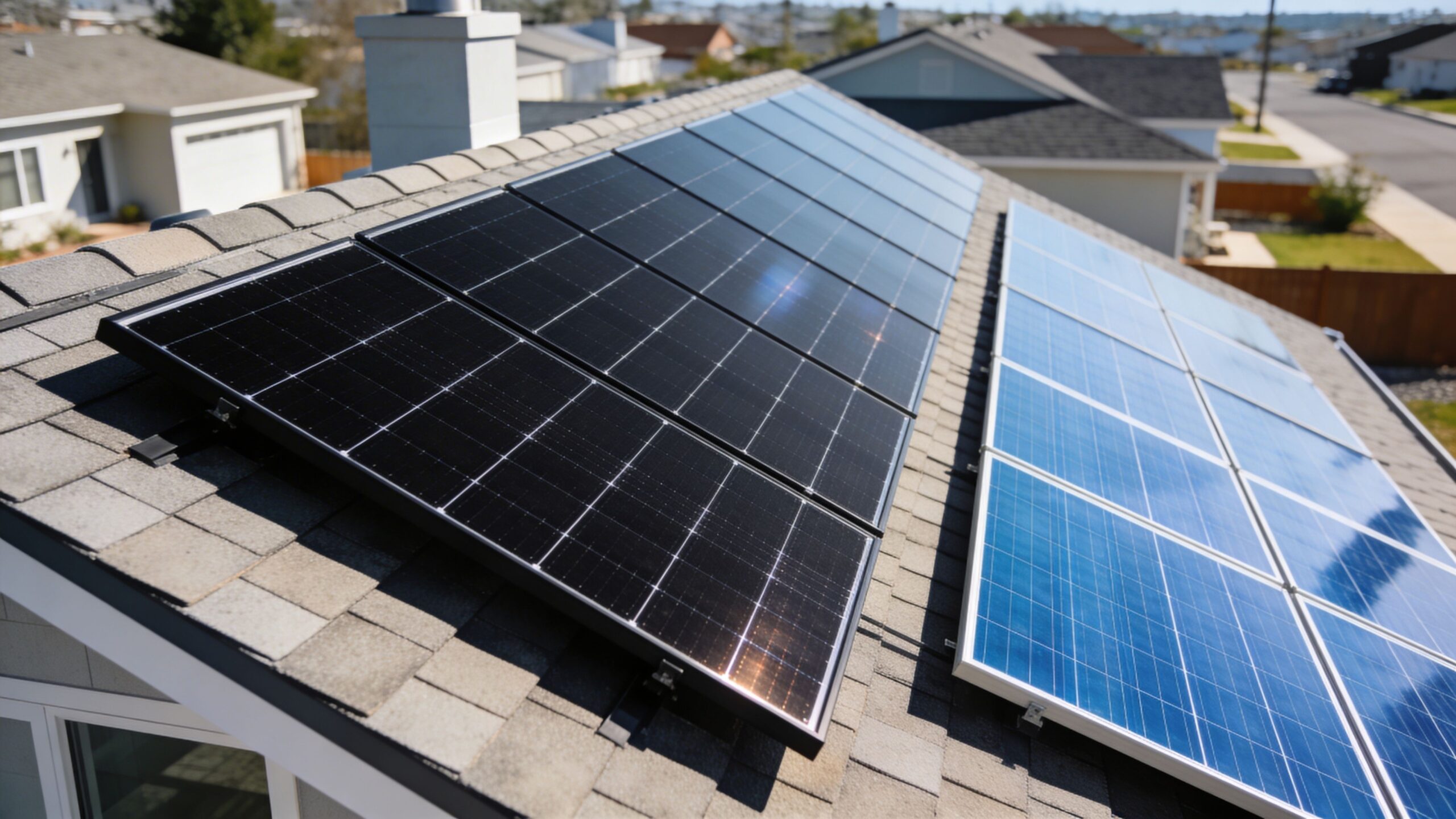
This is why monocrystalline panels have become the premium standard in many installations. They are especially useful when roof space is limited and every square foot matters. Their dark, uniform appearance also makes them popular for visible residential rooftops, but their real strength is functional: they allow a system to generate more power in less space. In modern solar design, that power density is often the deciding factor.
Polycrystalline Silicon and Its Role
Polycrystalline solar panels also use silicon, but the material is made from multiple crystal fragments rather than a single crystal structure. That multi-crystal form generally makes it easier and less wasteful to manufacture, but it also introduces more resistance to electron flow, which is why polycrystalline panels tend to be less efficient than monocrystalline ones. DOE’s photovoltaic primer identifies crystalline silicon as the mainstream material family and distinguishes the performance advantages of the monocrystalline branch within it. Even with lower efficiency, polycrystalline panels still matter because solar is not always a race for the highest number on the label. In projects with abundant roof or ground space, a slightly less efficient panel can still make financial sense if the upfront cost is attractive. That makes polycrystalline technology part of an important solar lesson: the best material depends on the site, the budget, and the goals of the system, not just the highest lab record.
The Other Important Materials Inside a Silicon Panel
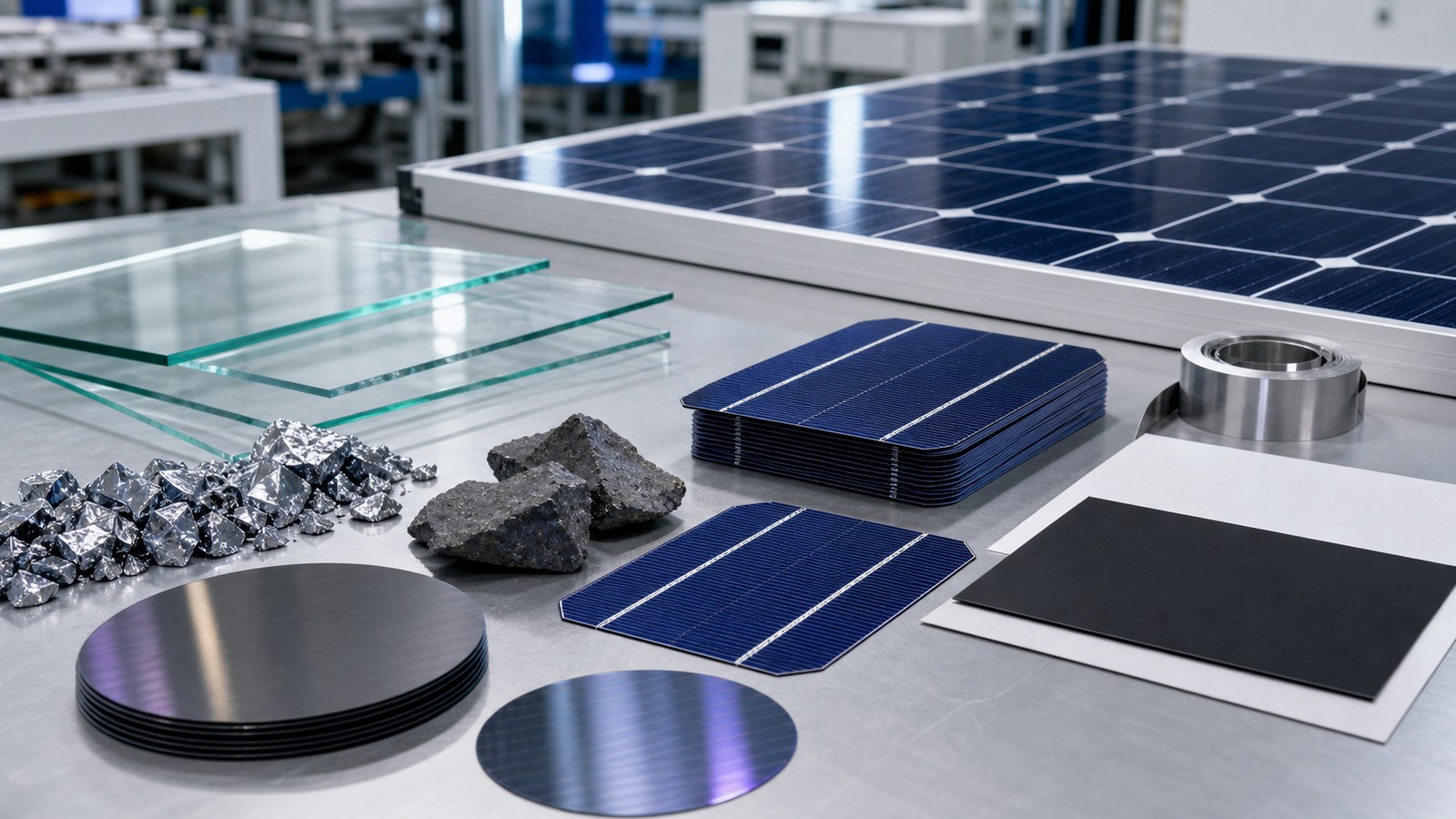
When people ask what solar panels are made of, they often focus only on the cell material, but a finished solar panel contains much more than the absorber layer. Silicon cells are typically protected by tempered glass on the front, encapsulation materials that seal the cells from moisture and contamination, a backsheet or rear glass layer, aluminum framing, wiring, and a junction box that routes power safely out of the module. DOE’s system design basics emphasize that PV arrays must be mounted on durable structures capable of withstanding years of weather exposure, which helps explain why module protection materials matter so much.
These supporting materials are not just packaging. They help determine durability, weather resistance, mechanical strength, and long-term performance. A solar panel is really a layered system where the semiconductor captures sunlight, while the surrounding materials preserve that function across decades of wind, rain, hail, heat, and cold. Without those protective layers, even the best cell material would struggle outside the lab.
Thin-Film Solar Materials
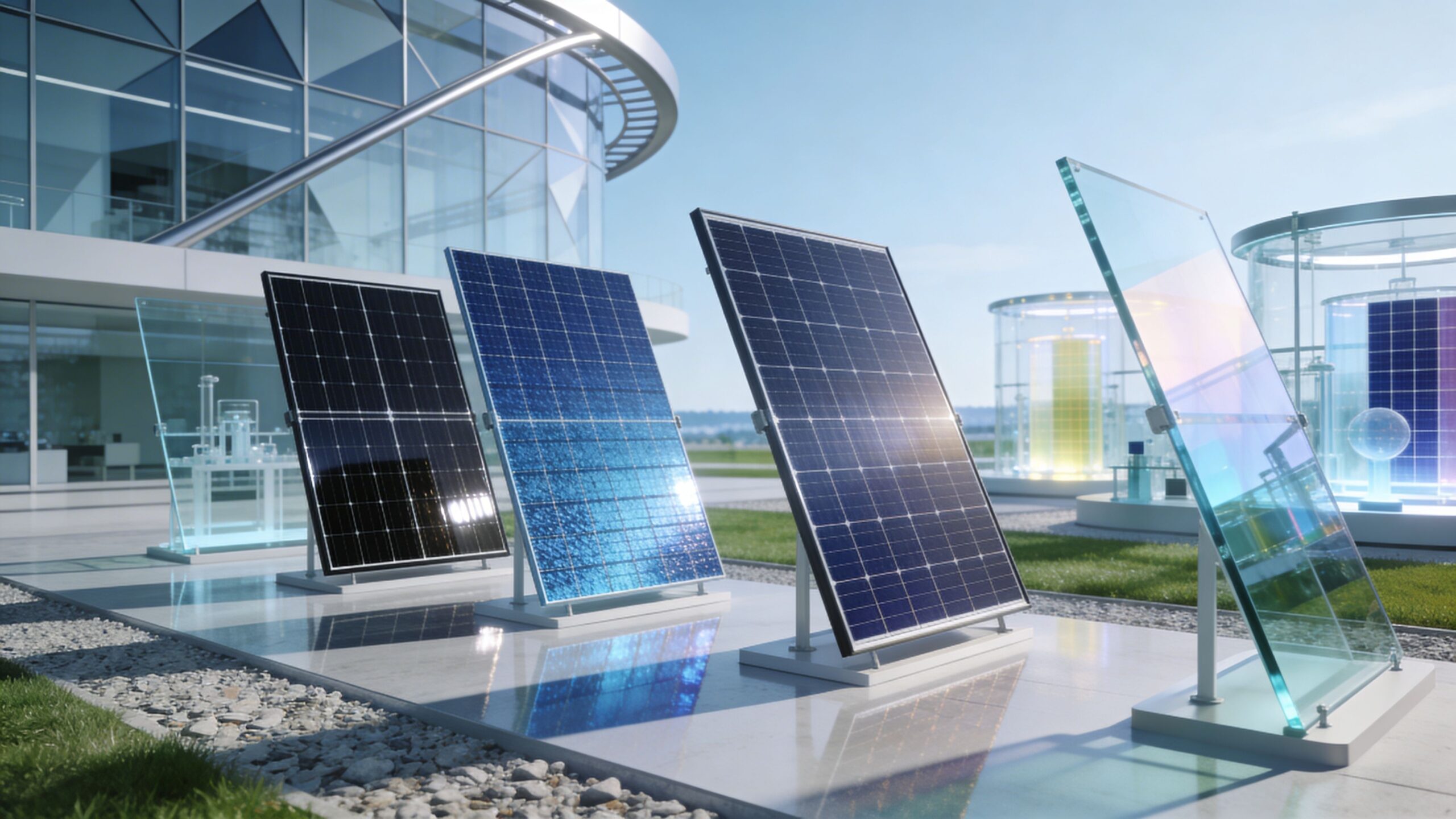
Thin-film solar panels use a different material strategy from crystalline silicon. Instead of cutting relatively thick wafers from silicon ingots, manufacturers deposit extremely thin photovoltaic layers onto a supporting substrate such as glass, metal, or polymer materials. DOE explains that thin-film solar cells generally cost less and can be easier to fabricate than silicon in some contexts, though they are usually less efficient. That difference in construction opens the door to different kinds of solar products. Thin-film panels can be lighter, and in some cases more flexible or more visually uniform than crystalline panels. This makes them interesting for large-scale fields, integrated building surfaces, specialty structures, and portable systems. Thin-film does not replace silicon across the board, but it extends solar into places where rigid crystalline modules may not be the best answer.
Cadmium Telluride, CIGS, and Amorphous Silicon
Thin-film is really a family of materials rather than a single technology. One major thin-film material is cadmium telluride, which DOE identifies as most of the remaining global shipment share outside dominant monocrystalline silicon. Another is copper indium gallium selenide, usually called CIGS, which has long drawn interest for its versatility and thin, light construction. Amorphous silicon is also part of the thin-film world, though it typically operates at lower efficiency than crystalline silicon.
Each of these materials reflects a different approach to balancing performance, cost, weight, and manufacturing complexity. Some are better suited to utility-scale projects, some to specialty products, and some to architectural applications. That range is part of what makes solar materials such a fascinating subject. The question is not merely what works, but what works best in a particular context.
Perovskite: The Material Everyone Is Watching
Perovskite solar cells have become one of the most exciting subjects in modern photovoltaic research. DOE says perovskite solar cells are a type of thin-film cell named after their crystal structure and built with layers that can be printed, coated, or vacuum-deposited onto a substrate. The same DOE source notes that perovskite efficiency climbed from 3% in 2009 to over 25% in 2020, one of the fastest rises seen in photovoltaic research. NREL describes perovskite materials as offering excellent light absorption and strong charge-carrier properties, with the potential for low-cost, scalable solar technology if researchers can overcome stability and environmental compatibility barriers. That is why perovskite gets so much attention. It is not just another incremental material. It represents the possibility of pairing very strong performance with a new kind of manufacturing freedom.
Why Stability Is the Big Perovskite Challenge
For all the excitement, perovskite is still an emerging technology rather than a default choice for everyday rooftops. DOE says producing uniform, high-performance perovskite material at large scale remains difficult, which helps create a gap between small-cell results and large-area module performance. NREL’s recent work on perovskite encapsulation and outdoor durability also shows that long-term stability remains one of the most important issues before broad commercialization can happen.
That does not make perovskite less important. In fact, it may make the technology even more interesting, because the remaining work is now less about proving basic promise and more about solving real-world engineering problems. Researchers are working on better encapsulation, better interfaces, better stability under sunlight, and more scalable production methods. The story has moved beyond “can this material work?” to “how do we make it work reliably outside the lab?”
Tandem Cells and the Future of Multi-Material Solar
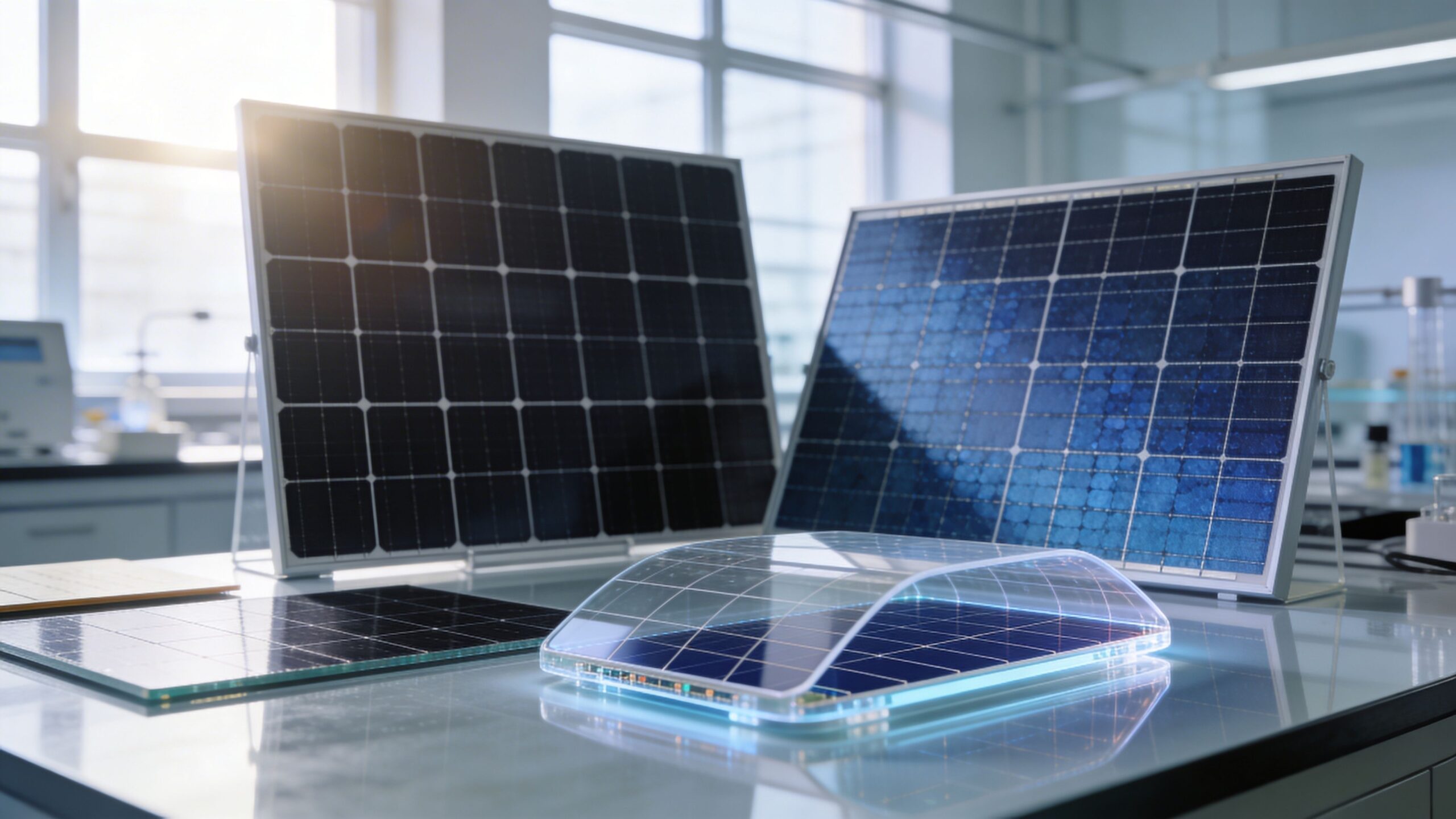
One of the most exciting directions in solar materials is the tandem cell. Instead of relying on one absorber material alone, a tandem design stacks two photovoltaic materials so each can capture different parts of the solar spectrum more effectively. DOE’s photovoltaic cell and module design program includes tandem concepts that combine two different photovoltaic materials, and this is one reason perovskites are drawing so much industry attention. This means the future may not be a simple contest in which one material replaces all others. Silicon and perovskite may work together, with perovskite layered on top of silicon to boost overall efficiency beyond what traditional single-junction silicon can do by itself. That kind of hybrid approach could allow the solar industry to build on the enormous manufacturing base of silicon while still gaining the spectral advantages of new materials.
How Solar Materials Influence Cost and Performance
Material choice shapes almost every important characteristic of a solar panel. Silicon is proven, durable, and high performing, but the production of purified ingots and wafers is energy intensive and highly specialized. Thin-film materials can reduce material usage and enable lighter or more flexible products, but they often give up some efficiency. Perovskites may promise cheaper, scalable manufacturing, but they still face durability and scale-up hurdles. DOE’s materials and design pages consistently frame solar research around improving efficiency, reliability, and manufacturing cost all at once, because those factors are tightly linked.
That is why solar materials are never just a chemistry discussion. They are also a design and economics discussion. A high-efficiency panel may cost more but save space. A lower-cost panel may need more area. A flexible material may open up entirely new applications. In solar, the material decision is really a project decision in disguise.
Real-World Performance Depends on More Than the Cell
A common beginner mistake is assuming the cell material alone tells the whole performance story. In reality, a solar panel’s output depends not only on its absorber material but also on temperature, orientation, shading, installation quality, module design, and long-term degradation. DOE’s photovoltaic pages emphasize both cell and module research as well as broader system design and energy yield, which highlights that performance is always a full-system issue. This is one reason solar shopping can be tricky. A great material in a bad layout will underperform, while a more modest material in a well-designed system can still deliver excellent value. Understanding materials is essential, but it works best when combined with an understanding of where and how the panel will actually operate. That is where solar knowledge becomes practical instead of purely technical.
Why Solar Materials Will Keep Evolving
Solar technology is already mature enough to power homes, cities, industries, and utilities at enormous scale, but the materials story is still evolving fast. DOE continues to support research in advanced silicon, thin-film technologies, tandem cells, and module materials because each area offers a different way to improve efficiency, reliability, or manufacturing cost. NREL’s ongoing emphasis on perovskite durability and material engineering shows that the next breakthroughs are likely to come from refining not only what solar cells absorb, but how they are packaged, protected, and produced.
That is what makes solar such an exciting field for long-term content. It includes both the dependable workhorse materials already transforming the grid and the next-generation compounds that may redefine what solar panels can look like. From rooftop modules to flexible surfaces and tandem research, solar materials sit at the center of one of the most dynamic technology stories in modern energy.
Final Thoughts
The complete story of solar panel materials is really a story about layers, choices, and tradeoffs. Silicon remains the dominant material because it balances durability, maturity, and strong performance. Thin-film materials broaden the design possibilities of solar by making modules lighter and more adaptable. Perovskites point toward a future in which solar may become even more efficient, cheaper to manufacture, and more versatile in form. For beginners, the biggest takeaway is simple: solar panels are not made from one universal recipe. They are engineered systems built from specific materials chosen for specific reasons. Once you understand that, solar technology becomes far more interesting and far more understandable. Instead of seeing a panel as a black box, you start to see it as a carefully designed stack of science, engineering, and real-world problem solving.