Why This Confusion Happens So Often
If you’re new to residential solar, it’s easy to assume that “solar panels” and “a home solar system” are the same thing. They’re closely related, but not interchangeable. Panels are the most visible part of solar, the part you can point to from the driveway. A complete home solar system is everything that happens after sunlight hits those panels—the conversion, the controls, the safety equipment, the connection to your home, and sometimes the ability to store power for later. This difference matters because it changes what you’re actually buying, what it costs, what it can do during a power outage, and how long-term performance is measured. When homeowners compare quotes, read product pages, or watch installation videos, they often see the word “solar” used loosely. This guide clears that up so you can shop smarter, ask better questions, and avoid paying for something that doesn’t match your goals.
A: Not directly—panels need an inverter and system components to deliver usable power safely.
A: Panels, inverter(s), racking, wiring, safety disconnects, monitoring, and grid interconnection equipment.
A: Some prices show panels only; complete systems include permits, labor, electrical work, and warranties.
A: No—most grid-tied systems shut down unless you add battery backup and proper controls.
A: Not always—many homes start with grid-tied solar and add storage later if needed.
A: Microinverters or optimizers usually handle shade and multiple roof angles better than basic string systems.
A: Both matter, but installation quality and system design often have the biggest impact on outcomes.
A: Often yes, but it’s easier if the original design planned for inverter capacity and utility limits.
A: Yes in most areas; permitting and inspections are part of a complete, code-compliant installation.
A: Usually a grid-tied system sized to your usage, with monitoring, and optional storage if outages are common.
Solar Panels: The Energy Collectors on the Roof
Solar panels are photovoltaic modules designed to convert sunlight into electricity. They do one job: capture sunlight and produce direct current (DC) power. Panels are measured by wattage, and their performance depends on sunlight exposure, temperature, orientation, and shading. When you hear about “high-efficiency panels,” you’re hearing about how effectively a panel converts sunlight into DC electricity per square foot.
Panels are critical, but they’re not a plug-and-play appliance. A panel alone can’t power your home. Your house runs on alternating current (AC), and your electrical system needs specific protections, disconnects, and controls. That’s why panels are only one ingredient in the recipe. They’re the engine’s cylinders—but not the fuel system, computer, transmission, or brakes.
A Complete Home Solar System: The Full Power Pathway
A complete home solar system includes solar panels plus the equipment that turns that raw DC production into safe, usable power for your home. The system typically includes an inverter, mounting hardware, wiring, safety shutoffs, monitoring tools, and the interconnection components that tie solar into your electrical panel and the utility grid. Think of it as a full pathway. Sunlight becomes DC power at the panels, DC power becomes AC power at the inverter, and AC power flows through your home’s electrical system. In many installs, the system also communicates with the utility meter to export energy, track credits, or comply with grid safety rules. Without that complete chain, panels are simply potential, not usable power.
The Inverter: Where Solar Becomes Household Electricity
The inverter is one of the most important differences between “panels” and “a system.” Panels produce DC. Homes use AC. The inverter is the translator between those worlds. It converts solar electricity into the form your outlets and appliances need. Inverter choice also affects performance, especially on roofs with shade or multiple angles.
Some systems use a single string inverter, which handles the whole array in one central unit. Others use microinverters, which sit behind each panel and convert power at the panel level. A third approach uses power optimizers paired with a central inverter, offering panel-level optimization with centralized conversion. These choices impact cost, monitoring detail, and how shading affects output.
Mounting, Racking, and Roof Integration
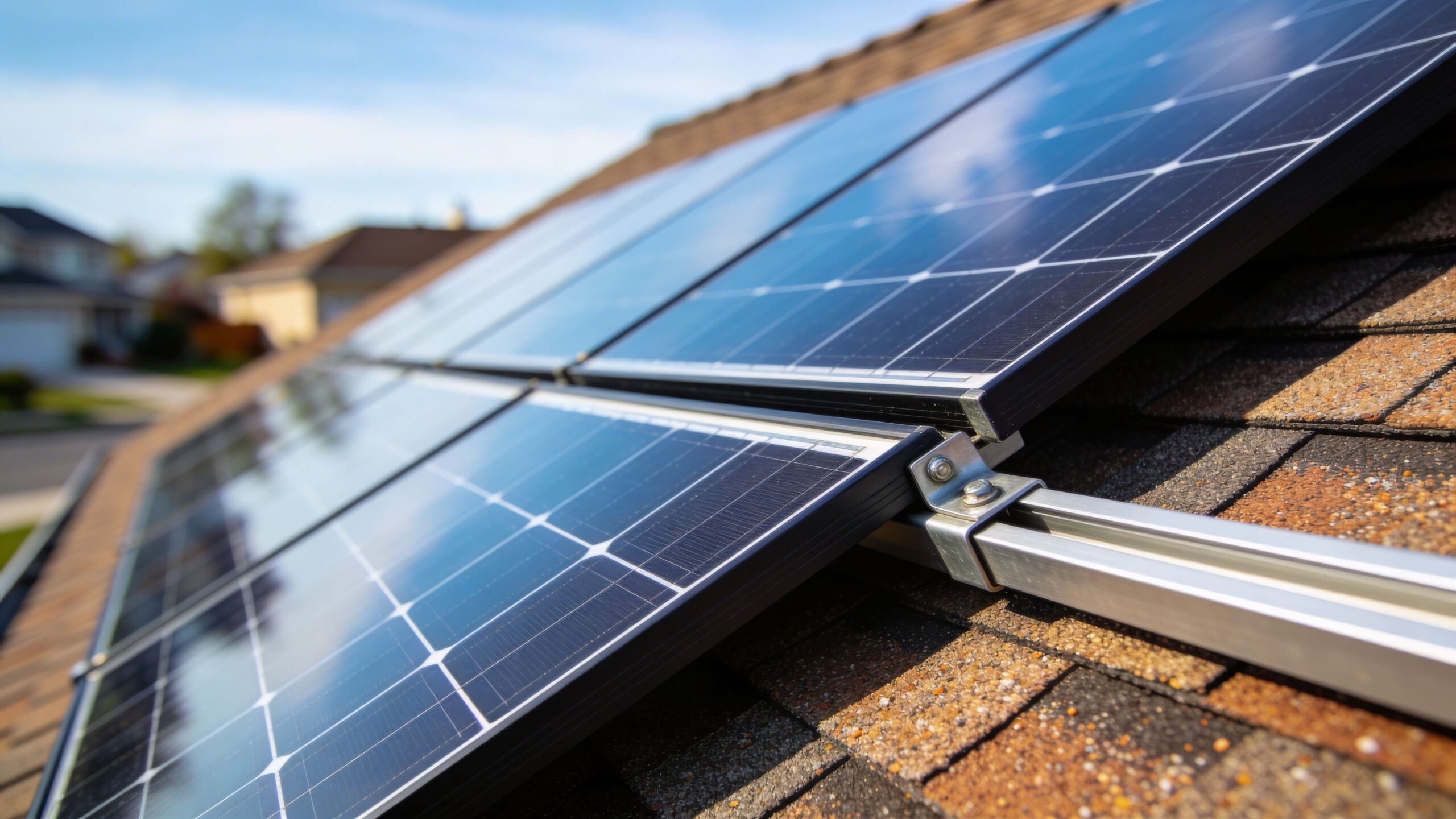
Panels are only as good as the way they’re installed. A solar system includes the racking and mounting equipment that secures panels safely to your roof or to a ground-mounted structure. This hardware is engineered to handle wind, snow loads, and long-term exposure to weather. It also sets the panel angle and spacing, which affects airflow and temperature. Roof penetrations, flashing, and waterproofing are part of the system story too. The goal is a watertight, durable installation that protects your roof and keeps the panels stable for decades. This is a big reason why “just buying panels” is rarely the full solution for homeowners.
Wiring, Safety, and Code Compliance
A complete solar system includes electrical wiring, conduits, labeling, disconnects, and grounding equipment designed to meet electrical codes and safety standards. This is not the glamorous part of solar, but it’s the part that protects your home, your installer, and utility workers.
Solar systems must include ways to safely shut down power for maintenance or emergencies. Many systems also include rapid shutdown features that reduce voltage on the roof when the system is turned off, an important safety measure in many jurisdictions. When someone says they’re getting “solar,” they’re getting this safety framework along with the panels.
Monitoring: Knowing What Your Solar Is Actually Doing
Panels produce power. A system proves it. Monitoring tools track production over time and, in many cases, show household consumption too. Monitoring lets homeowners confirm their system is performing as expected, spot shading or equipment issues early, and understand how daily habits affect solar usage. This is where the “complete system” really shines. Instead of guessing whether you’re saving money, you can see production data by day, month, and season. It’s like having a dashboard for your home’s energy economy.
Grid-Tied Solar Systems: The Most Common Setup
Most residential solar systems are grid-tied. That means your solar works together with the utility grid. During the day, your home uses solar power first, reducing how much you buy from the utility. If your system produces more than you use, the excess can be exported to the grid for credits, depending on your local policy.
At night or during low production, your home draws power from the grid as usual. This type of system is generally the most cost-effective and is often the first step for beginners because it delivers strong savings without requiring battery storage.
Off-Grid Systems: Solar That Runs Independently
An off-grid solar setup is a different beast. It’s designed to operate without any connection to the utility grid. That means it needs battery storage and usually a backup generator plan for extended bad weather. Off-grid systems include more storage capacity, more complex controls, and a different approach to load management. Off-grid is best for remote homes or homeowners who truly want independence from the grid. It can be done, but it requires a different mindset. Instead of using electricity whenever you want, you manage electricity like a resource that must be produced and stored.
Hybrid Systems: Solar with Battery Backup
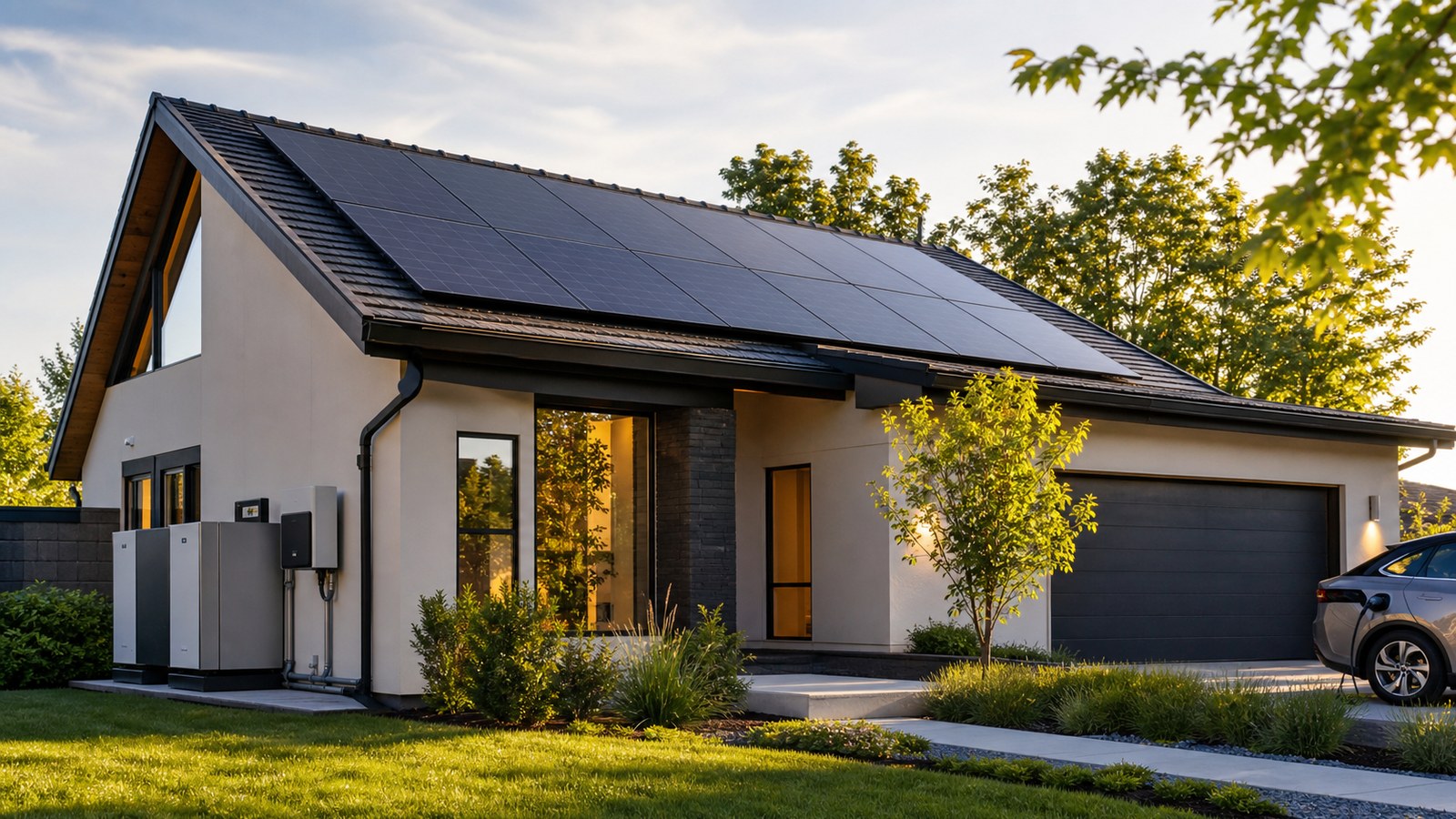
Hybrid systems combine solar with battery storage while still maintaining a grid connection. This is where a complete home solar system becomes more than a bill reducer. It becomes a resilience tool. A hybrid system can store excess solar power for nighttime use and provide backup power during outages.
However, batteries don’t automatically mean your whole home runs during a blackout. Many systems power selected circuits, called critical loads, such as refrigerators, lighting, internet equipment, and outlets. Designing backup capacity is part of what makes a system “complete,” because it must match the homeowner’s expectations with what the equipment can actually deliver.
The Real Cost Difference: Panels Are the Tip of the Price Tag
When you see a low price for “solar panels,” it’s often a product-only number. A complete home solar system includes engineering, permits, installation labor, electrical upgrades if needed, and compliance steps like inspections and utility interconnection. Those are real costs, and they’re part of what makes the system safe and legally operable. This is why two proposals can look wildly different even when the panel count seems similar. One might include higher-quality inverters, more robust racking, better monitoring, and a stronger warranty package. Another might look cheaper but omit items that matter. Comparing “panels vs system” helps you avoid apples-to-oranges decisions.
Warranty Differences: Product vs Performance vs Workmanship
Panel warranties usually cover product defects and performance over long periods, often with a multi-decade performance guarantee. But a solar system includes other components that have different warranty timelines. Inverters often have shorter warranties than panels. Batteries have their own cycle-based warranty structures. Workmanship warranties depend on the installer and can be a major factor in long-term satisfaction.
When evaluating solar, don’t focus only on panel warranty length. A complete system is only as reliable as its weakest link. A great panel paired with a weak inverter strategy or a poor installation can still produce a frustrating experience.
What You’re Actually Comparing When You Shop
When someone says they’re deciding between solar panels and a complete home solar system, they’re usually deciding between a product purchase and a turnkey solution. Panels alone don’t handle design, permitting, interconnection, and installation quality. A complete system typically includes those services, plus the supporting hardware and safety features required. If you’re buying panels to build a DIY system, that can work in some contexts, but it requires strong electrical knowledge, local code awareness, and careful planning. For most homeowners, the “system” approach is the practical route because it’s designed to work with the grid, pass inspections, and function predictably over time.
Which Option Fits Which Homeowner?
Panels-only thinking tends to attract DIY-minded homeowners or those looking at smaller, off-grid projects like sheds, RVs, cabins, or dedicated backup circuits. For a primary residence tied to the grid, a complete system is usually the right fit because it includes the infrastructure your home requires.
If your main goal is reducing electric bills with minimal hassle, a grid-tied solar system is typically the best match. If your main goal is backup power and resilience, a hybrid system with batteries becomes more relevant. If you’re remote or want independence, off-grid becomes the conversation, but with bigger storage and more planning.
The Practical Questions to Ask Before You Decide
Instead of asking “panels or system,” ask what you want your solar to do. Do you want bill reduction only, or do you want backup power? Are you trying to offset 60% of usage or 100%? Do you have time-of-use rates that reward battery use? Is your roof shaded or complex? These answers determine the right inverter approach, whether storage is worth it, and how the system should be designed. A solid installer or project plan should be able to explain the system as a whole, not just the panel brand. You should walk away understanding what’s on the roof, what’s on the wall, what’s in your electrical panel, and how it all works together.
The Bottom Line: Panels Are a Part, a System Is a Solution
Solar panels are the visible symbol of solar energy, but a complete home solar system is the complete solution. Panels capture sunlight. The system converts, protects, monitors, and delivers that energy to your home safely. When you compare options, you’re not just choosing hardware—you’re choosing performance, reliability, and long-term results.
If your goal is predictable savings, safe operation, and a system that passes inspections and works for decades, think in systems. Panels matter, but the pathway matters more. When those two are designed together, solar becomes what it’s supposed to be: a quiet, reliable power upgrade that pays you back every sunny day.