Why Solar Has Become a Business Decision, Not Just a “Green” One
Commercial solar used to be the kind of upgrade a company installed to make a statement. Today it’s increasingly installed to make a spreadsheet happy. Electricity costs tend to rise, demand charges can sting, and long-term planning feels a lot easier when part of your power comes from a fuel source with a price tag of “sunlight.” When businesses go solar, they’re not buying panels as much as they’re buying decades of lower, more predictable energy costs. The appeal is straightforward: a commercial solar system converts sunlight into usable electricity for your building. That electricity offsets power you’d otherwise purchase from the utility. The more your building uses electricity during sunny hours, the more value you capture immediately. And when your solar system produces more than you need at a given moment, many utilities allow that extra energy to flow back to the grid, generating credits that can reduce your bill later. When you connect all of this to incentives and depreciation rules, solar starts to look less like an “environmental initiative” and more like an operational advantage. This guide breaks down how commercial solar works from the ground up—no engineering background required.
A: No. Nighttime power comes from the grid, a battery, or another energy source.
A: Yes, but production is usually lower than it is under strong direct sunlight.
A: Not always. Many systems are grid-tied without batteries, while backup designs need storage or another backup source.
A: Many panels are designed for decades of service, with gradual output loss over time.
A: Sometimes it can reduce energy charges greatly, but fixed fees, seasonal use, and utility rules still matter.
A: Standard grid-tied systems usually shut down unless approved backup equipment is installed.
A: It should be checked carefully because roof replacement after installation can require panel removal and reinstallation.
A: They can help when space is limited, but cost, warranty, layout, and total production matter too.
A: Owners usually watch monitoring, keep panels reasonably clear, and arrange service when output or equipment looks abnormal.
A: Review energy use, roof condition, shade, utility rules, goals, and realistic budget before comparing systems.
The Big Picture: What a Commercial Solar System Actually Does
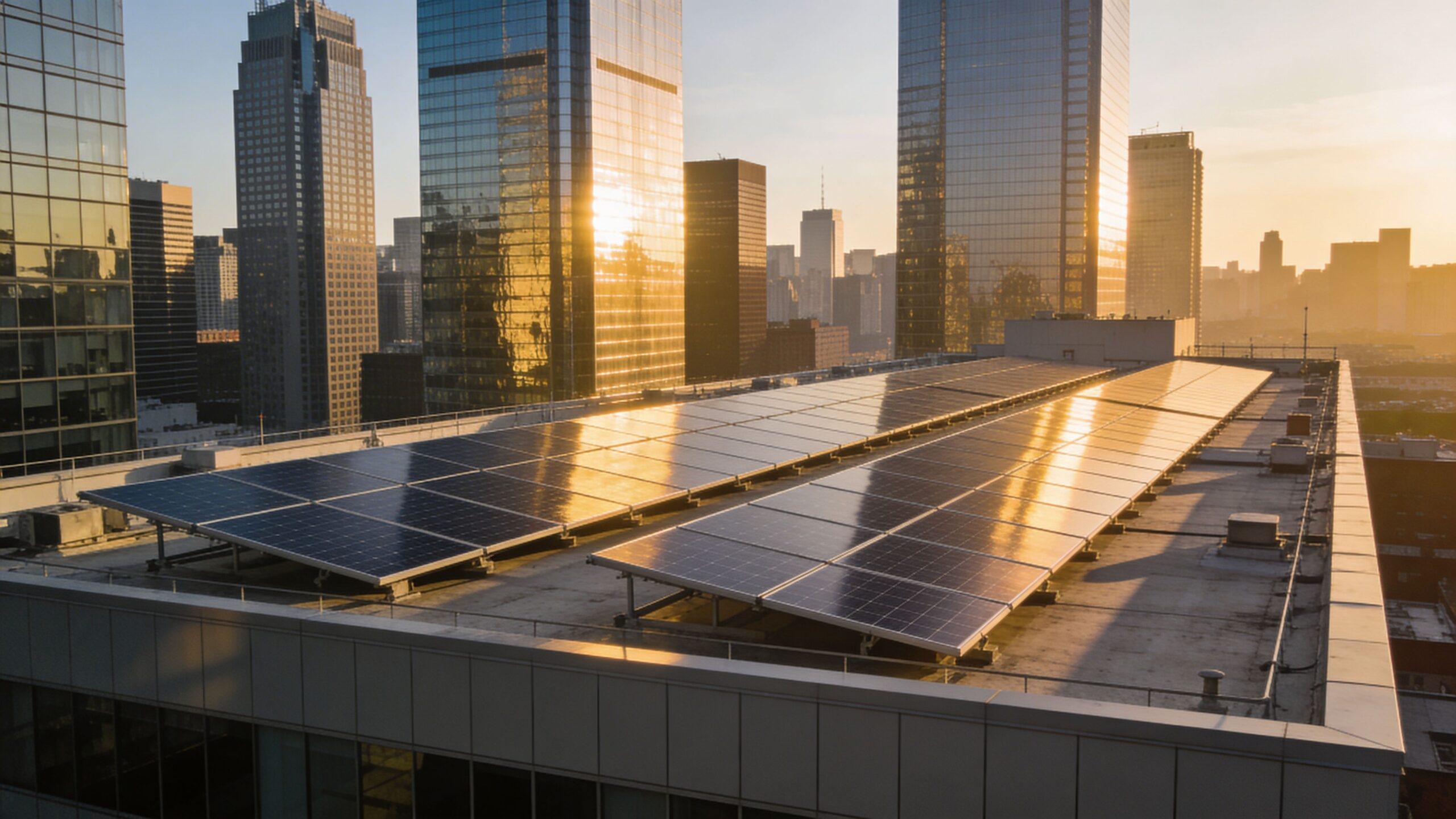
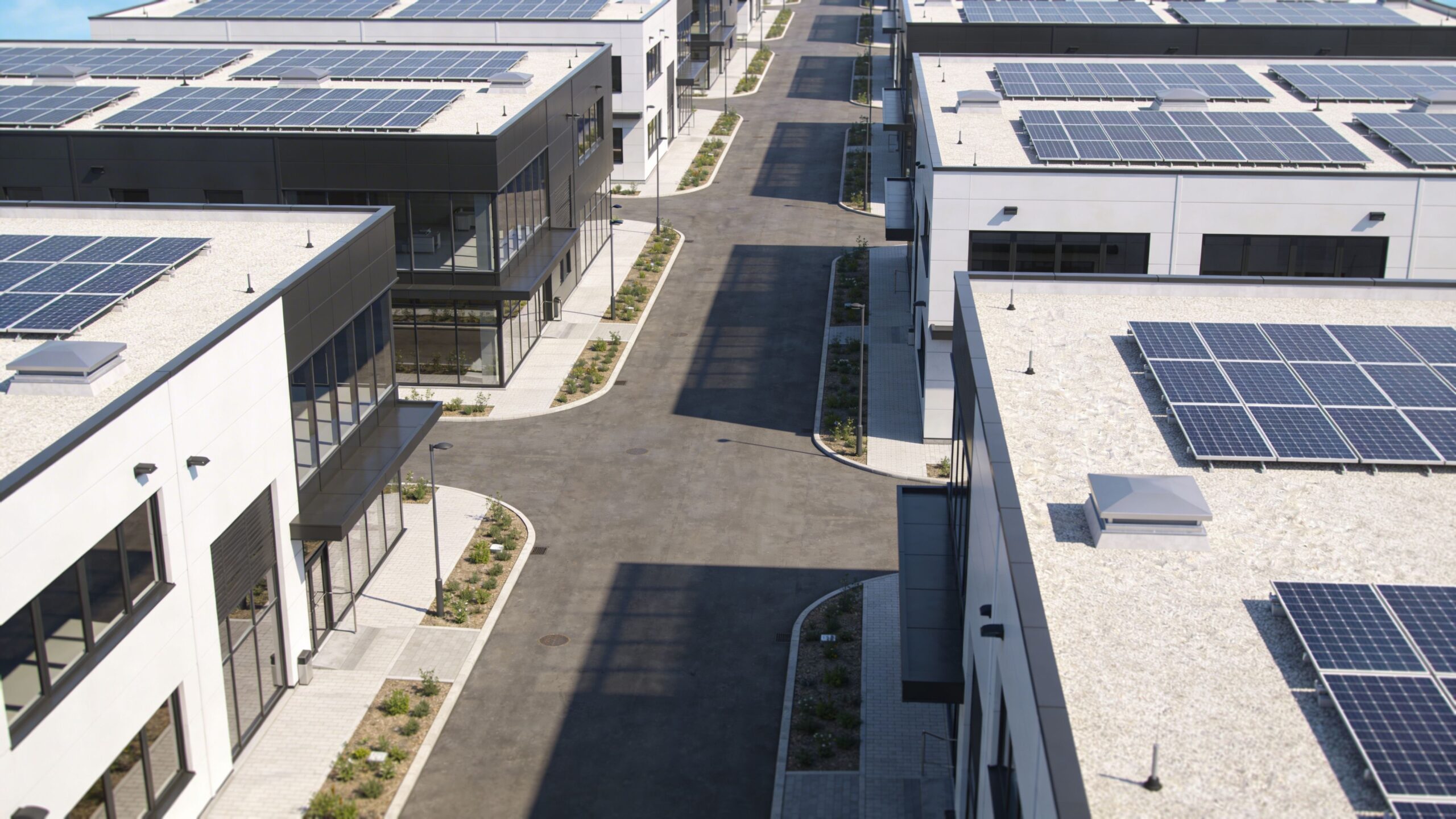
At its core, commercial solar is a power plant you own (or contract to use) that sits on your roof, over your parking lot, or on nearby land. Instead of burning fuel to create electricity, it harvests energy already arriving from the sun every day. The system produces electricity when light hits the panels, and your building uses that energy first. If the solar system isn’t producing enough at a given moment, the building pulls the remaining electricity from the utility as usual. If the system produces more than your building is using, the extra electricity typically goes out to the grid, depending on your utility rules and interconnection agreement.
Commercial solar is designed around your business’s real-world load. The goal is not necessarily to produce 100% of your annual energy needs. Instead, it’s to offset a meaningful portion of your usage in the most cost-effective way. Many businesses aim to cover daytime loads, shave peak demand, and secure long-term savings without oversizing the system beyond what the site and utility policies can support.
Step One: Solar Panels Turn Light Into Electricity
Solar panels are made of photovoltaic (PV) cells, most commonly silicon-based. When sunlight hits these cells, it energizes electrons inside the material and creates a flow of direct current (DC) electricity. Think of it like a gentle pressure pushing electrons through a circuit. The brighter the sunlight, the more power the panels can generate—though modern panels still produce energy even under clouds, haze, or winter sun.
Commercial panels are mounted in a series of connected “strings” or groups. The system’s design accounts for roof space, sun exposure, shading from parapets or rooftop units, and the structural limits of the building. Panels are usually tilted slightly to shed water and improve annual production, but many commercial roofs use low-tilt racking to balance performance with wind loads and roof constraints.
From a business perspective, the most important concept is that panel capacity is rated in kilowatts, but your savings show up in kilowatt-hours. Capacity tells you how big the system is. Energy production tells you how much electricity it actually generates over time. A system’s energy output depends on local sunlight levels, orientation, shading, temperature, and equipment efficiency.
Step Two: Inverters Convert Solar Power Into Building Power
Solar panels generate DC electricity, but most commercial buildings run on alternating current (AC). That’s where inverters come in. Inverters convert DC electricity into AC electricity that your building can use. Commercial systems commonly use string inverters, central inverters, or module-level power electronics depending on project size and design goals. Regardless of type, inverters also help optimize performance and provide safety features, such as shutting down generation when the grid is down (a requirement for most grid-tied systems unless special equipment and storage are installed).
Inverters also act as the system’s “translator” and often its “coach.” They monitor performance, detect issues, and report data to dashboards used by facility teams and solar providers. For businesses, this monitoring matters because it turns solar into a measurable asset. If production drops due to a fault or a wiring issue, the data can reveal it quickly.
Step Three: Your Electrical Panel and Meter Become a Two-Way Street
Commercial solar doesn’t replace your utility connection in most cases. Instead, it works alongside it. The solar system connects into your building’s electrical infrastructure—typically through a breaker panel, switchgear, or a dedicated service entrance connection depending on scale. This connection allows solar electricity to feed your building’s loads. Your utility meter plays a key role. With many grid-tied systems, the meter can measure power flowing in both directions: electricity you purchase from the utility and electricity your system exports when production exceeds demand. In many programs, exported electricity earns credits that offset electricity you use later, such as in the evening or early morning.
This is where businesses often have their “aha” moment. Solar is not just “powering the building when the sun is out.” It’s also interacting with billing structures, rates, and sometimes demand charges in ways that can materially impact ROI. A good design doesn’t just maximize production. It maximizes savings under your specific tariff.
Net Metering, Credits, and How Utilities Fit Into the Story
Net metering is the most commonly discussed policy, but it’s not the only model. In a traditional net metering setup, exported energy earns credits that offset imported energy on a one-to-one basis, though details vary widely by utility and region. Some programs offer credits at a different rate, such as an avoided-cost rate. Others use “net billing,” where exports are credited at a lower value than imports. Some commercial tariffs also have demand charges and time-of-use pricing that can change the math.
For a beginner, here’s the simplest way to think about it: your utility bill is a combination of how much energy you consume, when you consume it, and sometimes how high your peak demand gets. Solar reduces the amount you need to buy from the grid, especially during sunny hours. Depending on your rules, excess generation can also reduce costs later through credits. That’s why a pre-project analysis is essential. Commercial solar is not a one-size-fits-all product. It’s an energy strategy that should be matched to your building’s usage pattern and your utility’s pricing.
What About Batteries? Solar Storage in Plain English
Battery storage is not required for most commercial solar projects, but it’s increasingly common. A battery stores excess solar electricity during the day and discharges it later when your building needs it. This can be useful for several reasons: reducing peak demand charges, shifting solar energy into evening hours, and providing backup power for critical loads during outages.
It’s important to understand that most grid-tied solar systems shut down during a power outage unless they are designed with battery backup and specific controls. This is a safety measure to prevent electricity from feeding into power lines while utility crews are working. For businesses, storage can be a powerful tool when demand charges are high or when reliability is mission-critical. But it adds cost and complexity, so it should be evaluated based on your tariff, resilience needs, and operational priorities.
The Commercial Solar Journey: From First Call to “Power On”
A typical commercial solar project moves through a series of phases, each with its own purpose. It begins with a site evaluation and energy analysis. The solar provider reviews your electricity usage, rate structure, available installation space, shading, roof condition, and electrical infrastructure. This is where initial system sizing and projected savings are developed. Next comes engineering and design. Structural engineers confirm the roof can handle the additional load and wind forces. Electrical engineers design how the system will connect into your building and comply with safety codes. If the roof needs repairs or has limited remaining lifespan, many businesses choose to address that before installing solar to avoid costly panel removal later.
Permitting and utility interconnection follow. The project must meet local building and electrical codes, and the utility must approve the system’s interconnection to the grid. After approvals, installation begins. Panels are mounted, wiring is run, inverters are installed, and the system is integrated with your electrical service. Finally, there’s inspection and commissioning. Local inspectors verify code compliance, and the utility grants permission to operate. Once that approval is in place, your system starts producing electricity and your monitoring platform begins tracking performance.
Costs in Beginner Terms: What You’re Paying For
When a business pays for a commercial solar installation, it’s paying for more than panels. The cost includes engineering, permitting, labor, mounting hardware, inverters, electrical work, monitoring systems, and often the behind-the-scenes project management required to coordinate inspections and utility approvals. Costs are often quoted per watt of installed capacity, but the best way to evaluate value is in projected lifetime savings and payback period. A lower cost per watt is not always better if it comes with lower-quality components, weak warranties, or a design that doesn’t match your rate structure.
Many commercial projects can be financed in ways that reduce or eliminate upfront costs. Loans, leases, and power purchase agreements (PPAs) allow businesses to adopt solar while preserving capital for other investments. In a PPA, a third party owns the system and sells you the electricity it produces at an agreed rate, often lower than utility pricing.
Incentives, Tax Benefits, and Why They Matter
Commercial solar economics are often supercharged by incentives. While specific programs vary by location, businesses commonly benefit from tax credits, accelerated depreciation, rebates, and sometimes performance-based incentives. In plain language, incentives reduce your effective system cost or improve cash flow. Tax credits can reduce tax liability, depreciation can accelerate deductions, and rebates can cut upfront expense. For many businesses, these mechanisms shorten payback periods and increase ROI significantly.
Because incentives can change over time and differ based on project type, it’s smart to treat them as part of a professional financial model rather than a rough guess. A reputable installer can help estimate them, but businesses should also involve their tax advisor to confirm how incentives apply to their specific situation.
Measuring ROI: The Simple Way to Understand Solar Payback
ROI for commercial solar is usually evaluated through payback period, total lifetime savings, and sometimes internal rate of return. Payback period is the easiest to understand: how many years it takes for the savings to equal the project’s net cost after incentives. If a system saves you a meaningful amount each year, and incentives reduce the upfront expense, payback can be surprisingly fast. After payback, the solar system continues producing value year after year. Since panels can last 25 to 35 years, the years beyond payback can represent a long runway of reduced operating costs. A beginner-friendly mindset is to view solar as a hedge against rising electricity prices. The more your utility rates increase over time, the more valuable your solar production becomes.
Operations and Maintenance: Is Solar “Set It and Forget It”?
Commercial solar is known for low maintenance. Panels have no moving parts, and most systems operate quietly in the background. Maintenance usually consists of periodic inspections, monitoring review, and occasional cleaning depending on dust, pollen, or local conditions. The most common component that may need replacement during a system’s life is the inverter, often after 10 to 15 years depending on type and usage conditions. Warranties and service agreements can cover performance and repairs, which helps businesses treat solar like a predictable asset rather than a surprise expense. For most companies, the day-to-day experience of having solar is simple: the system produces, the dashboard reports, and the electric bill shrinks.
Common Beginner Questions Businesses Ask Before Going Solar
Businesses often wonder whether their roof is suitable, whether they can still use the utility, and whether solar will work during winter or cloudy days. In most cases, a solar provider can quickly evaluate roof condition and shading to determine feasibility. Your business will almost certainly remain connected to the grid, using it as backup whenever solar production is low. And while production varies seasonally, systems are designed based on annual output, not perfect daily conditions. Another common concern is disruption. Most commercial installs are planned to minimize interference with operations. Rooftop work happens outside of customer areas, electrical tie-ins are scheduled carefully, and safety protocols are strict.
The Bottom Line: Solar Is a System, Not Just Panels
Commercial solar works because it integrates several pieces into one coherent energy solution: panels generate DC power, inverters convert it to AC, your building consumes it first, and your utility connection balances the rest through purchases or credits. When you add incentives, financing options, and modern monitoring, the system becomes a long-term cost-control tool for businesses.
For beginners, the most important takeaway is this: commercial solar is not just about installing equipment. It’s about designing an energy strategy that matches how your business uses electricity, how your utility charges for it, and how you want to manage costs over the next decade or two. When done well, solar turns a monthly expense into an asset—one that works every sunny day without asking for a raise.