The 2026 Reality: Solar Has a “Range,” Not a Price Tag
If you’ve been shopping for a home solar system in 2026, you’ve probably noticed something that feels both exciting and frustrating: the numbers are all over the place. One website suggests a surprisingly affordable total. Another shows a bigger figure that looks like a kitchen remodel. A neighbor tells you they “got solar for basically nothing,” while another says it “wasn’t worth it.” All of those can be true—because solar pricing isn’t one price. It’s the result of system size, roof complexity, labor rates, permitting, equipment choices, and the rules your utility uses to credit the solar you send to the grid. In 2026, that last part—policy timing—matters more than many homeowners expect, because incentives can change how your final cost looks. This guide breaks down what homeowners should expect to pay in 2026, where the money actually goes, and how to compare quotes like a pro so you don’t accidentally buy the “cheapest” system that costs more over the long run.
A: Compare price-per-watt, equipment, warranties, and what’s included (permits, interconnection, commissioning).
A: Roof complexity, electrical scope, local permitting, and installer competition can all swing the total.
A: Not always—batteries add resilience and can help with time-of-use rates, but economics vary by plan and needs.
A: Electrical upgrades, roof work, long conduit runs, permitting fees, and excluded interconnection tasks.
A: Not if it cuts corners on design, roof attachment, inverter strategy, or workmanship warranty.
A: Total solar-only price divided by system watts; it helps compare projects of different sizes.
A: Only if export credits support it—otherwise, right-sizing and self-consumption often win.
A: If it’s old, full, or undersized, an electrician/installer may recommend an upgrade for safe interconnection.
A: Permits, inspection support, utility interconnection, monitoring, commissioning, and a clear warranty summary.
A: Start with a solar-only quote sized to your usage and utility rules, then evaluate storage as a separate decision.
A Quick Snapshot of Typical 2026 Costs
Most reputable cost sources describe installed residential solar pricing in the neighborhood of roughly $2.50–$3.50 per watt before incentives, with variation by region and project complexity.
To make that feel real, consider what those numbers mean in everyday system sizes. A smaller starter system around 6 kW often lands in the mid–teens to low–$20k range before incentives, while larger family-sized systems commonly land higher simply because they include more equipment and labor. EnergySage’s market data, for example, shows a 12 kW installation averaging around $30,505 before incentives in early 2026.
If you’re in Utah, EnergySage’s local dataset shows pricing around $2.65/W on average (with a typical system size reported around 11.83 kW), which puts a common install near the low $30k range before local incentives.
These aren’t the only possible numbers—but they’re a useful “expectation bracket” before your roof and your electrical setup shift the total.
The Most Important Cost Idea: Price Per Watt
Solar is often compared using price per watt (PPW) because it normalizes the quote across different system sizes. It’s not perfect, but it’s far better than comparing total dollars alone. A 12 kW system will almost always cost more in total than a 6 kW system, but the larger system can still be a better deal if the price per watt is lower.
In 2026, it’s common to see PPW ranges around $2.50–$3.50/W before incentives, depending on location, installer, equipment tier, and roof complexity. If you want one mental shortcut: simple roofs + healthy competition among installers tend to push PPW lower, while complex roofs + limited installer availability tends to push it higher.
Where the Money Goes: Panels Are Not the Whole Cost
Many first-time buyers assume the panels are the big expense. In reality, “panels only” is usually a smaller share of total system cost than people expect—because the installed system price includes much more than hardware. EnergySage specifically notes that panels can represent a relatively small slice of the full installed cost in typical projects.
The rest of the bill usually includes:
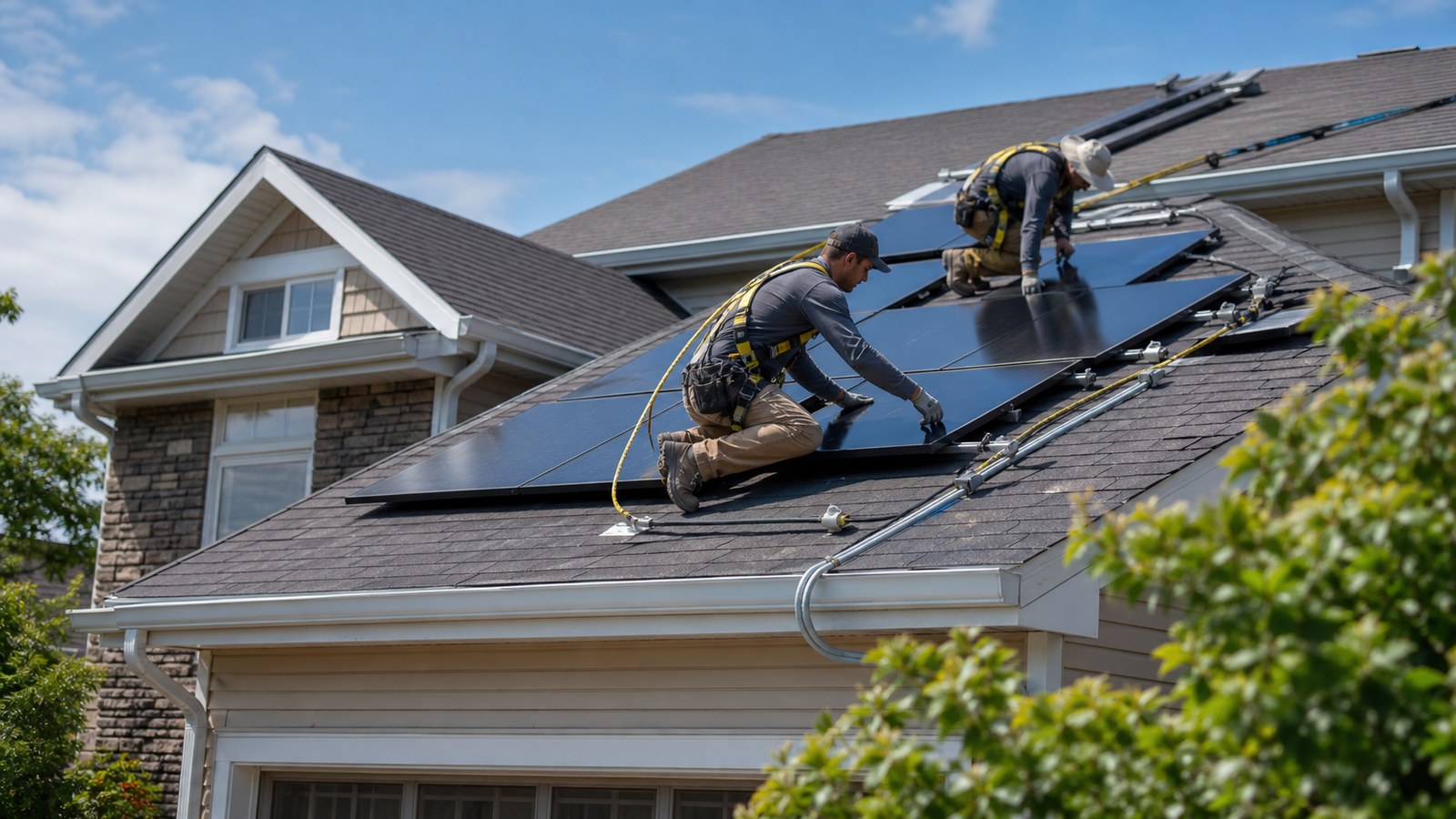
Installation labor (often the biggest single line item in real projects)
Inverter and electrical equipment
Racking and roof attachment hardware
Conduit and wiring runs
Design/engineering time
Permits and inspections
Utility interconnection work
Monitoring setup and commissioning
When a quote looks “shockingly low,” it’s often because some of these pieces are missing, minimized, or shifted into a separate add-on later.
Soft Costs: Permitting Can Quietly Add Thousands
“Soft costs” is the solar industry’s way of describing everything that isn’t the physical equipment. Permitting, paperwork, and local processes are a big part of that, and they can be surprisingly expensive.
Lawrence Berkeley National Laboratory (LBNL) research has found that differences in permitting and local regulatory processes can equate to a price impact of at least about $2,500 on a typical 5 kW residential installation, depending on jurisdiction. That’s why two nearly identical homes in different cities can get materially different quotes even if the equipment list is the same.
Equipment Choices That Change the Price
In 2026, many homeowners can choose between different inverter architectures and optional add-ons that influence both cost and performance.
Inverter type:
A single string inverter can be cost-effective on simple, sunny roofs.
Microinverters or optimizer-based systems can cost more but may perform better on complicated roofs with shade or multiple roof faces.
Monitoring and consumption metering:
Basic production monitoring is common, but adding consumption monitoring (seeing what the home uses, not just what solar produces) can increase cost and value.
Upgraded panels:
Higher-efficiency panels can cost more, but they may be worth it when roof space is limited.
Electrical Panel Upgrades: The “Surprise Cost” You Should Expect to Discuss
One of the most common reasons quotes differ is the electrical side of the home. If your main panel is older, crowded, undersized, or not set up for solar backfeed limits, an upgrade may be recommended or required.
This isn’t a “solar ripoff”—it’s a reality of connecting a power plant to a home’s electrical system safely. Some homes need minimal work; others need a meaningful upgrade that changes the final cost. The right installer will surface this early, not after you’ve already signed.
Batteries in 2026: The Add-On That Can Double the Conversation
Batteries have become more mainstream, but they’re still a major cost factor. EnergySage reports typical battery pricing around $15,228 before incentives for about 13.5 kWh of storage—roughly the size commonly associated with “essentials backup” in many households.
EnergySage also reports battery costs in the ballpark of $1,128 per kWh on average in early 2026 market data.
Local figures can vary. In Utah, EnergySage’s local storage data shows around $1,057/kWh and an average gross storage price around $13,737 for a typical ~13 kWh system, with ranges that vary by project.
The key point: batteries are not just “an add-on,” they’re a system design choice. They influence inverter type, backup panel configuration, and what your home can run during outages.
2026 Incentives: Why Timing Matters More Than Ever
Many homeowners plan their budget around the federal residential clean energy credit. Here’s the critical 2026 update: the IRS page for the Residential Clean Energy Credit states that the credit is 30% for costs of qualifying property installed from 2022 through December 31, 2025, and that it is not available for property placed in service after December 31, 2025.
Some consumer-oriented solar websites still reference a 30% credit in their calculators or examples, but in 2026 you should treat the current IRS guidance as the primary source for what is actually claimable.
Recent coverage has also discussed legislation changes that could be ending or phasing out certain clean-energy tax incentives, reinforcing why homeowners need to confirm eligibility with up-to-date guidance.
Practical takeaway: in 2026, you should evaluate quotes both “with incentives” and “without incentives,” and confirm what incentives you can actually claim based on placed-in-service dates and current rules.
What Homeowners Should Expect to Pay: A Useful “Budget Bracket”
Because your readers will want a plain-English expectation, here’s a safe, realistic way to frame it using current market references:
Typical installed solar-only systems often price around $2.50–$3.50 per watt before incentives, with plenty of regional variance.
Larger systems (like ~12 kW) commonly land around $30k before incentives in marketplace data, but can be higher or lower depending on roof and electrical scope.
Battery storage commonly adds a five-figure cost in many real projects, depending on capacity and backup design.
The “right” budget depends on what you’re building: bill reduction only, or bill reduction plus outage protection.
The Most Common Quote Traps in 2026
Solar quotes usually look clean on the surface. The most common traps are hidden in the assumptions.
Trap 1: A quote that looks cheap because it excludes required work.
If it doesn’t clearly include permitting, interconnection, and commissioning, you should expect add-ons.
Trap 2: Oversizing without explaining export value.
If your utility credits exports poorly, a bigger system isn’t always a better deal. A quote should explain how excess power is valued.
Trap 3: “Battery included” without defining backup scope.
Some battery quotes assume only a few circuits; others aim for whole-home capability. The price difference can be massive.
Trap 4: Comparing totals without comparing PPW and equipment tier.
A quote with better inverters, better roof attachment, and a stronger workmanship warranty can be the better deal even if the total is higher.
How to Compare Solar Quotes Like a Homeowner Who Wins
In 2026, a smart quote comparison focuses on clarity, not just price.
Start with three questions:
What is the price per watt (solar-only), and what’s included?
What assumptions were used for production (sun hours, shade, roof orientation)?
What does the proposal assume about incentives, and are those assumptions supported by current rules?
Then look at the “whole system reality”:
Inverter type and warranty terms
Roof attachment method and workmanship warranty
Monitoring included (production only vs production + consumption)
Electrical scope (panel upgrade? trenching? attic runs? subpanel for backup?)
Timeline and “placed in service” implications if any credits are claimed
Bottom Line: Expect a Range—And Expect the Details to Matter
In 2026, solar pricing is still attractive compared to where it was historically, but it’s not a commodity purchase. It’s an engineered home energy project. The best homeowner strategy is to treat the quote like a blueprint: understand the assumptions, confirm what’s included, and make sure the design matches your goals. When you do that, solar stops being confusing and starts being predictable—because you’re no longer shopping a mystery number. You’re shopping a system.